Blog

  • Ignite Your Fitness Journey with Pilates Dynamics in Randburg

    Ignite Your Fitness Journey with Pilates Dynamics in Randburg

    Pilates Classes Near Me

    What does a Pilates Class entail?

    You can choose between the following 2 types of Pilates Classes:

    1) Pilates Mat and Small Equipment and/or

    2) Pilates Large Machine / Large Equipment Classes.  Each one offers unique benefits and can be combined to get the most out of your fitness and Pilates workouts.

    Pilates workouts can be done either in a Pilates GROUP CLASS format or in a Pilates PRIVATE (ONE-ON-ONE) CLASS format.  In addition to this, you can also form your own private small group class, should you wish to come as a family or with your friends.

    Pilates Mat & Small Equipment:

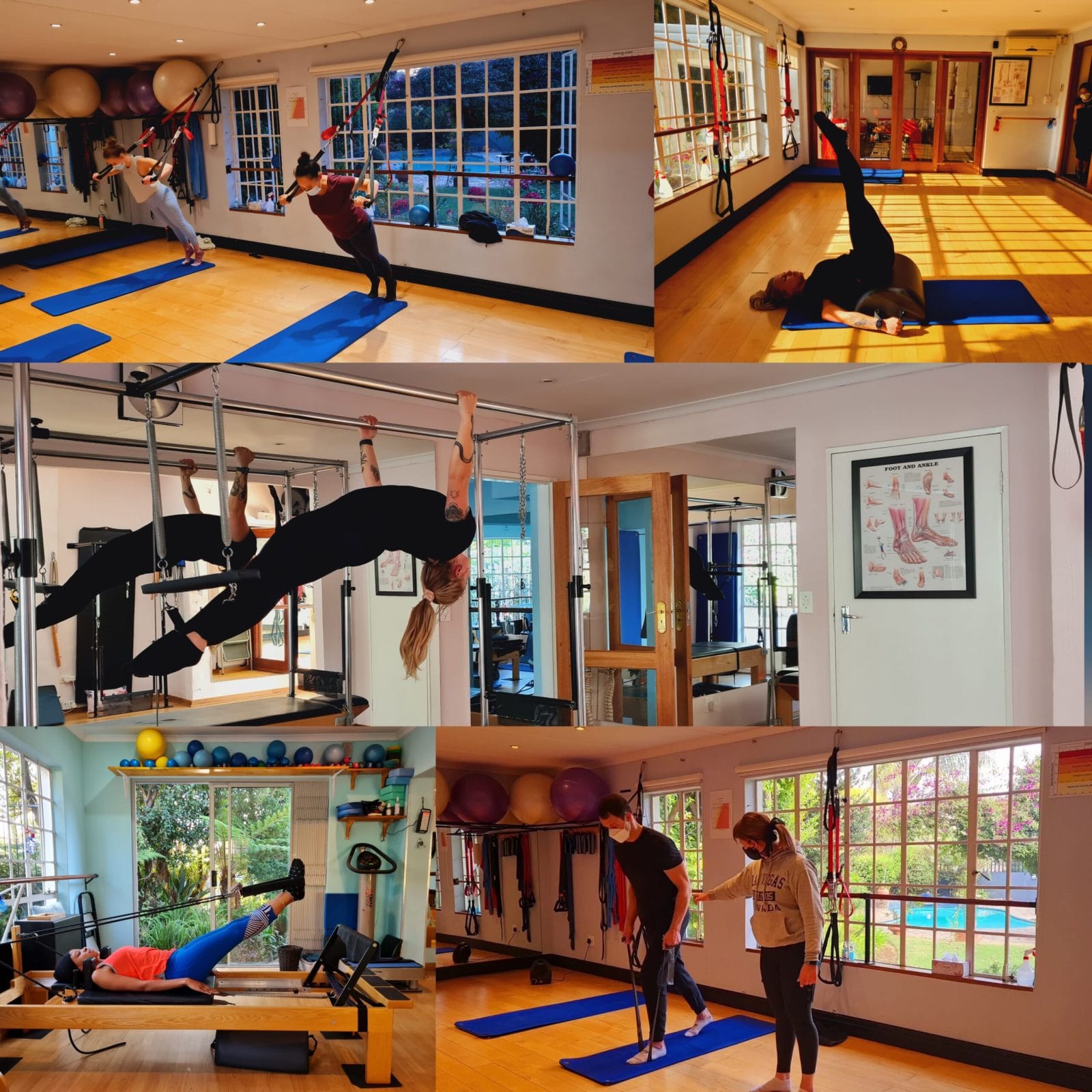
    At Pilates Dynamics our Pilates Mat & Small Equipment classes involves doing exercises either on the Mat (using your own body weight) and we will use equipment/small apparatus/props such as:

    ·         Magic Circles (Rings);

    ·         Physio (Big) Balls;

    ·         Small soft balls;

    ·         Weighted Balls;

    ·         Medicine Balls;

    ·         Free Weights;

    ·         Thera-bands;

    ·         Glicing Discs;

    ·         TRX;

    ·         Kettlebells;

    ·         Weighted Aerobic Bars;

    ·         Ballet Barre;

    ·         Toning Bars;

    ·         Trampolines; and

    ·         Foam Rollers

    Pilates Large Machine / Large Equipment Classes:

    At Pilates Dynamics our Pilates Large Machine classes involves doing exercises on Pilates Machines that works with spring tension, which is adjustable depending on the required strength or flexibility needed.  Any of the small Pilates equipment mentioned above, will also be used in addition to the Pilates Large Machines.  The studio has the following Pilates Large Machines:

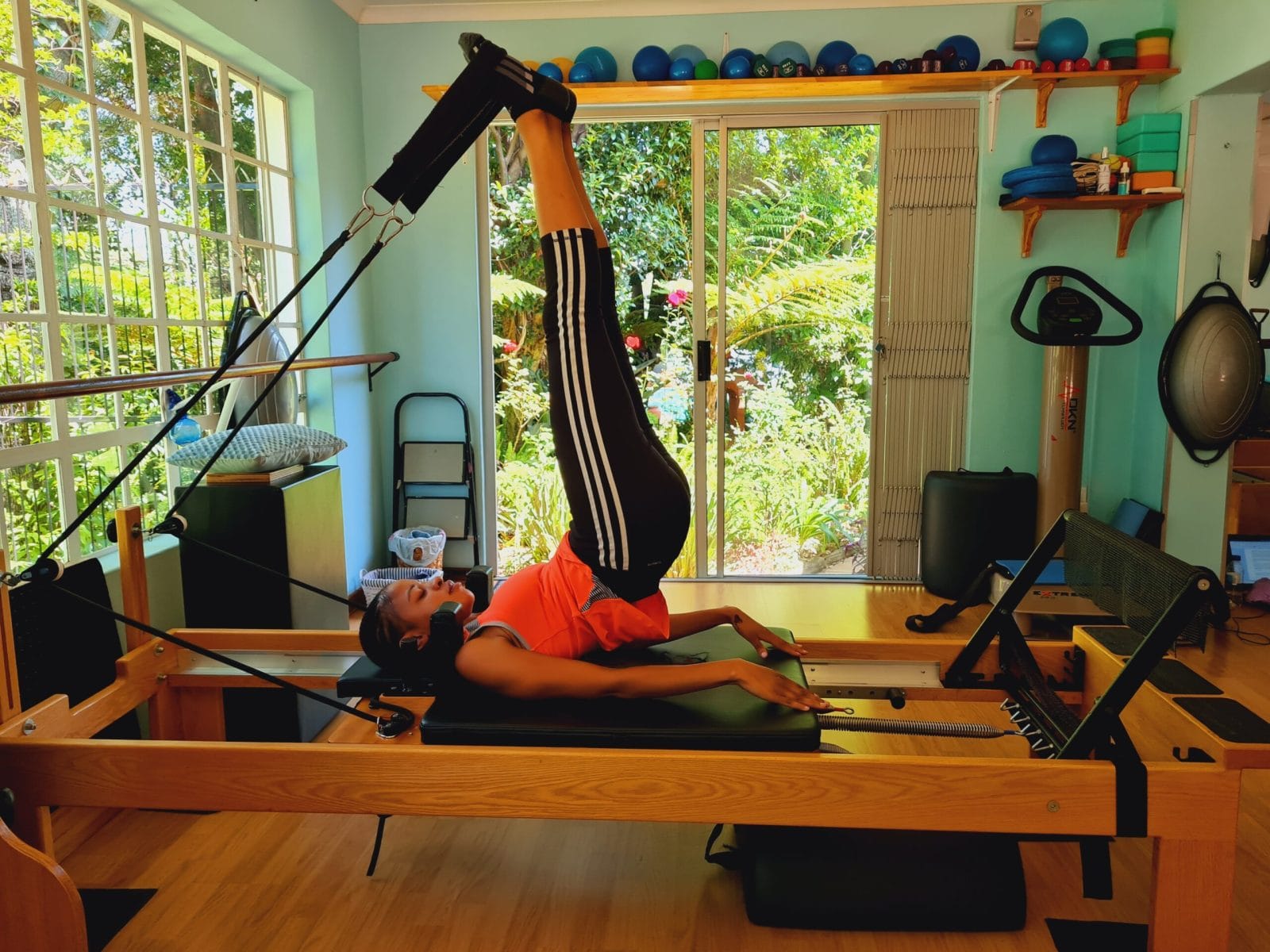
    ·         Pilates Reformers

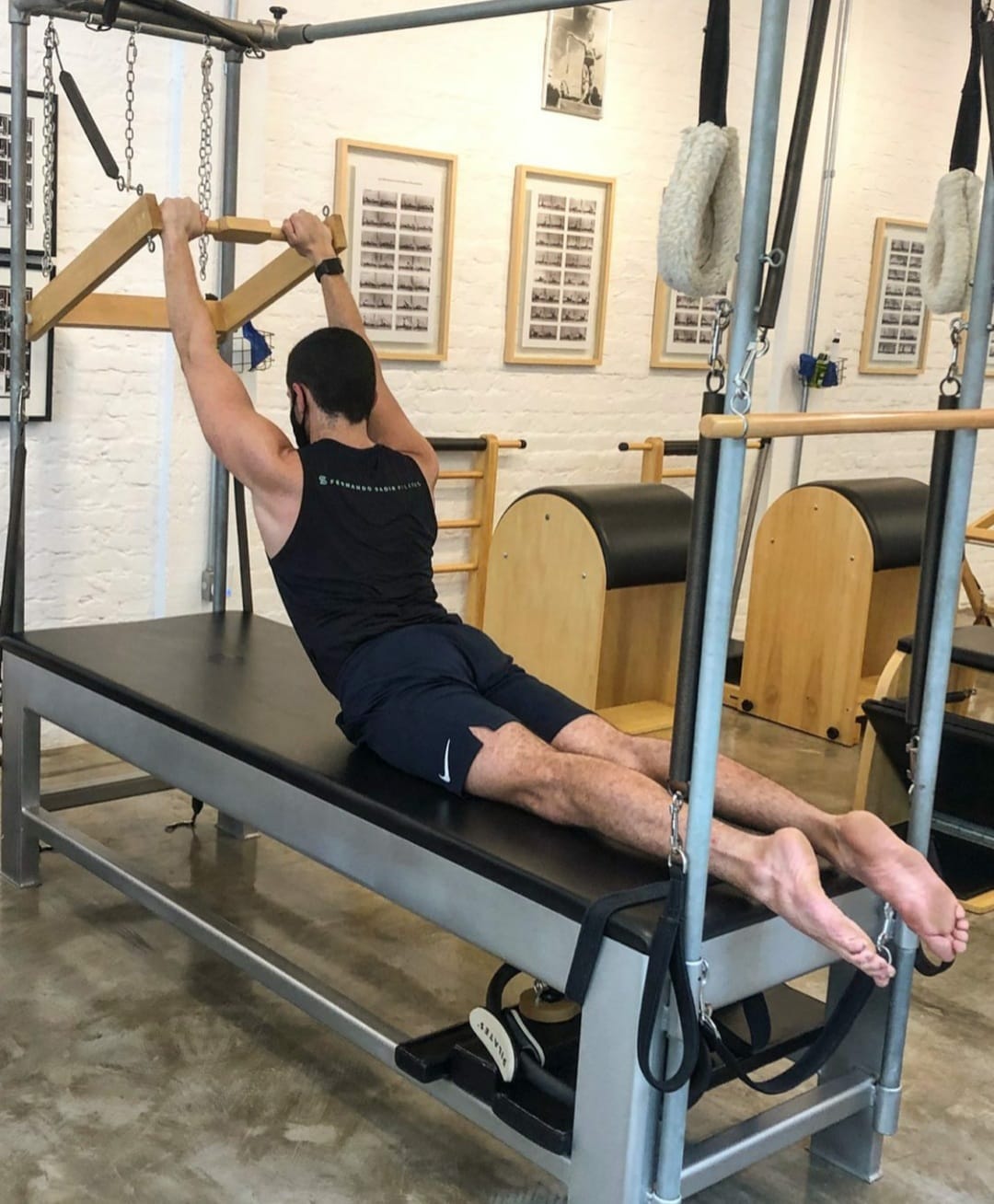
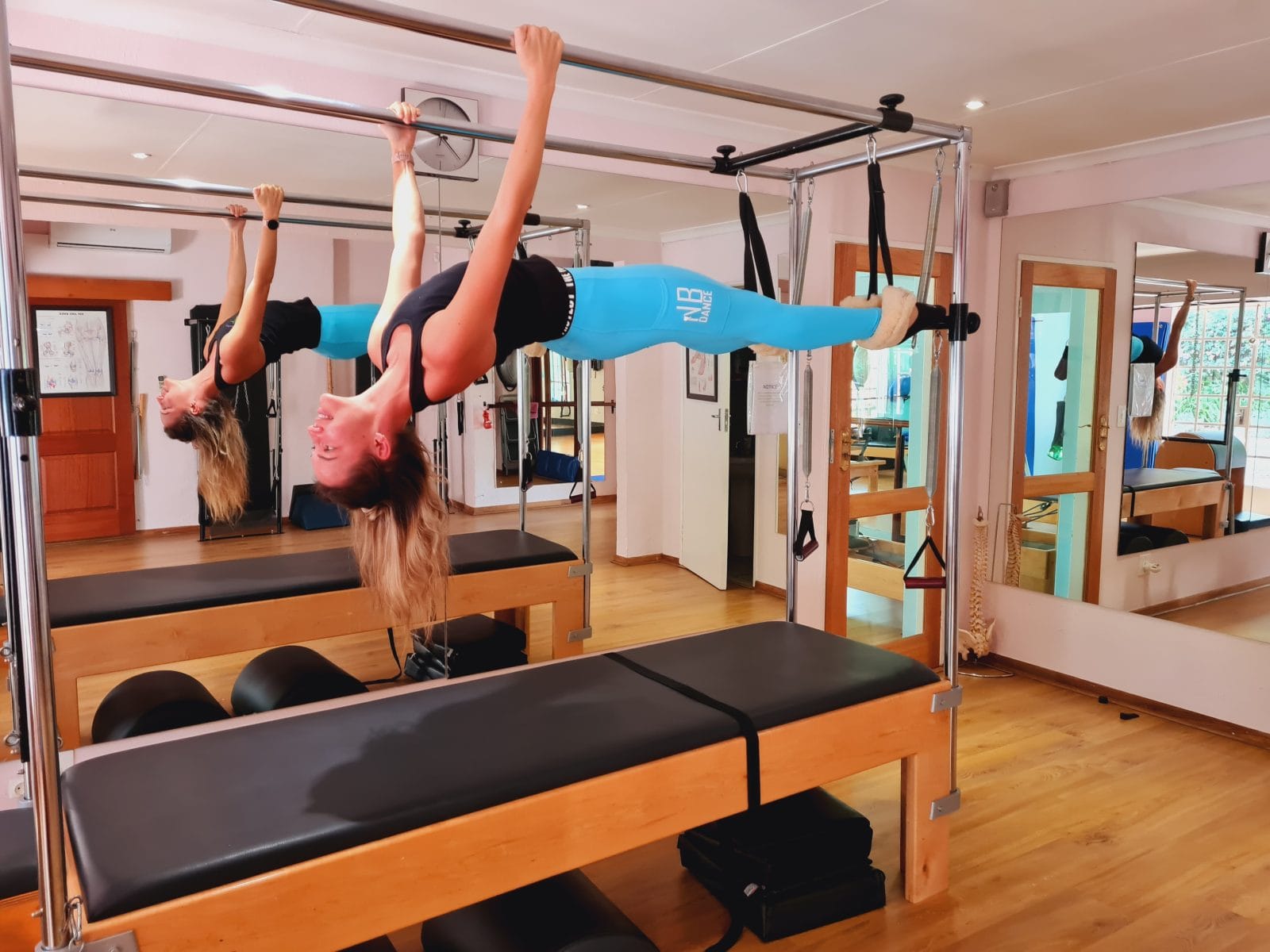
    ·         Pilates Cadillacs

    ·         Pilates Wunda Chairs

    ·         Pilates Towers

    ·         Pilates Ladder Barrels

    ·         Pilates Arc Barrels

    What can I expect from a Pilates Class?

    Pilates Dynamics

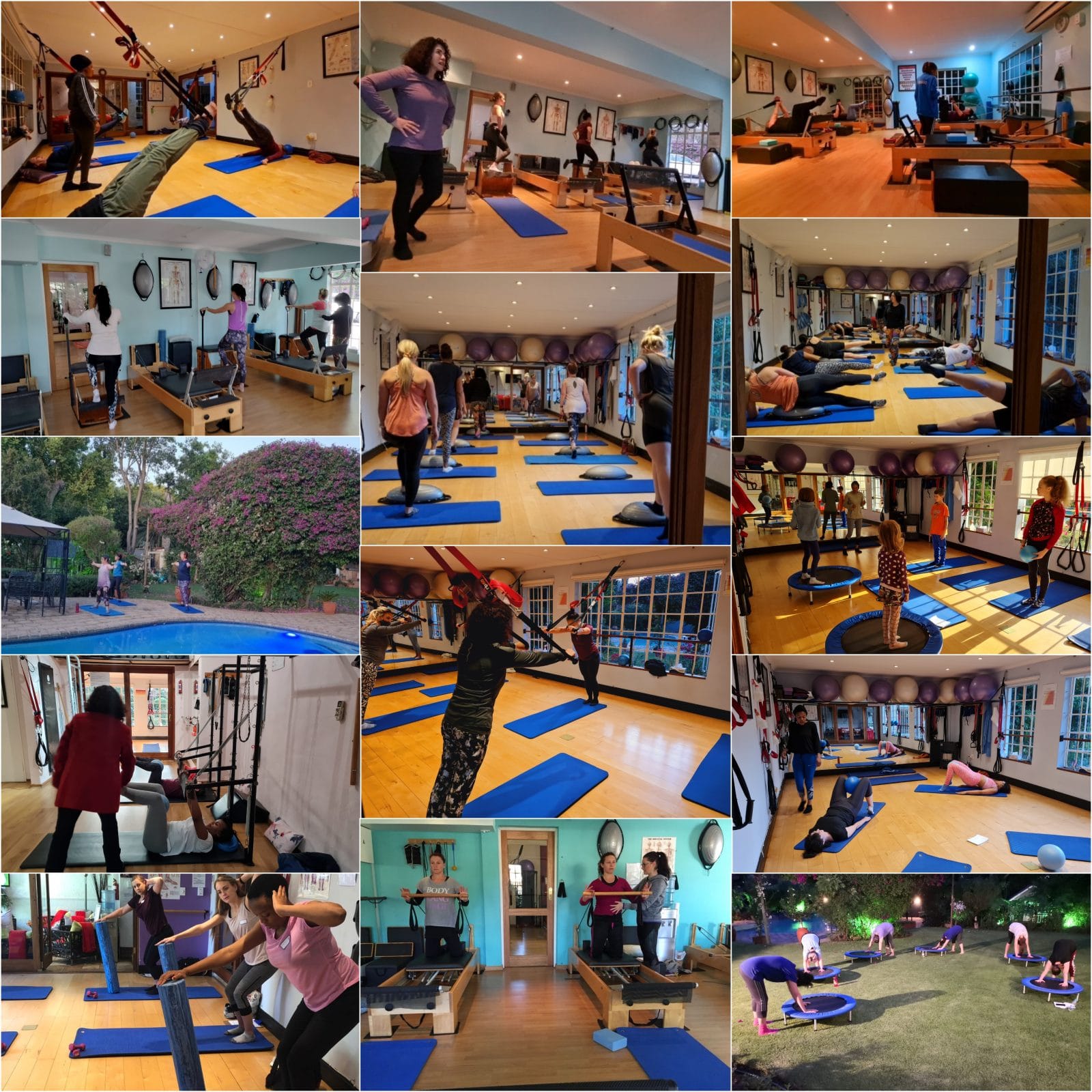
    Groups are small.  There is a maximum of 8 people in our Pilates Mat and Small Equipment classes and a maximum of 5 people in our Pilates Large Machine Equipment classes.  You are therefore assured of having our Pilates Instructors’ full attention and care.

    Exercises are performed either lying down, seated, on the knees, or standing on the mat/floor or on the Pilates machines.

    At Pilates Dynamics classes are never the same and each class is different and full of variety.  The focus is a full body workout, whilst ensuring that the principles of Pilates is adhered too.  Our Pilates workouts are designed to emphasize the correct biomechanics of movement to increase strength, flexibility, stamina, posture and dynamic stability.  Programs are geared for everyone – no experience required!  You will be getting not only the safest and most impacting workout – but will have fun doing it!

    The main focus of a Pilates class is in-depth abdominal work.  However, at Pilates Dynamics our programs are written structured in such a way that you get a full body workout.  No workout is ever the same, which prevents boredom.  During the Mat & Small Equipment Classes you can expect a class using the TRX or a Re-bounding class using the trampoline, or a Booty Barre class using the Ballet Barre.  The options are endless.

    The Pilates Large Equipment classes will be changed so that you use the Reformer one day and the Pilates Wunda Chair or Pilates Cadillac and Pilates Tower the next day as well as a host of other smaller Pilates equipment which is added to your workout to increase challenge and stability.

    Can anyone attend a Pilates Class?

    The beauty of Pilates is that any exercise can be modified for beginners, or people with injuries and can also be progressed for advanced clients and/or athletes who are looking for an extreme challenge.

    Can I expect to get a cardio workout as well?

    The pace of classes can be adjusted to get a cardiovascular endurance workout. Should you choose to do the Mat & Small Equipment Classes, Trampolines (Rebounding classes) are also used which incorporates the principles of Pilates with the added benefit of cardio, without the pressure on your joints.  The TRX is also incorporated to increase the heart rate to provide more cardiovascular health together with all the other benefits and postural health during our Pilates Mat & Small Equipment classes.  Booty Barre or Ballet Barre classes are a hot favourite and will ensure that you get your heart rate up whilst exercising along with funky music and using other equipment like weights.

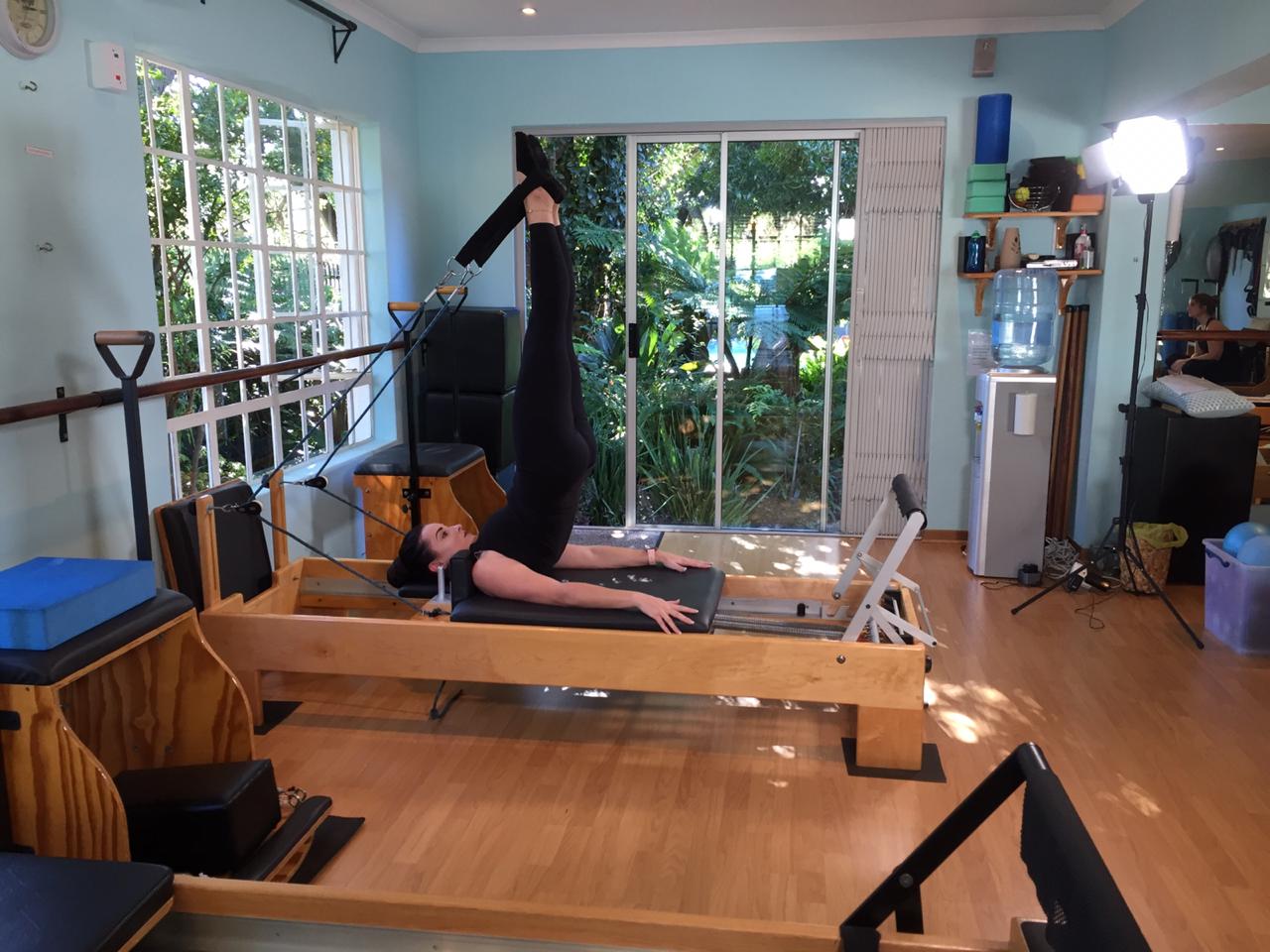
    The pace of classes in our Pilates Large Machine Classes are also adjusted to reap the benefits of cardiovascular health together with all the other strength and postural benefits of Pilates.  The Reformer for instance has a Jump Board which is specifically designed and recruited for cardiovascular work, without the pressure on your joints.  Balancing work with spring tension on a movable platform is a great and challenging favourite on the Pilates Reformer machine.

    Reformer bench

    How experienced are the Pilates Instructors at Pilates Dynamics?

    Our professional Pilates Instructors are all fully qualified and certified both internationally and nationally with many years of experience and with additional formal health and fitness qualifications.  Your safety and goals are our concern.  You will have our full attention, whether you engage in a group class or in a private (one-on-one) class.

    How do we sign up?

    Look for Pilates Classes Near Me and you will spot the best courses available at Pilates Dynamics.

    We can be contacted on 011-792 5459 or 072 999 2229 to book your class or email us on: info@pilatesdynamics.co.za

  • One Thing I Wish I Knew Before Starting My Pilates Teacher Training

    One Thing I Wish I Knew Before Starting My Pilates Teacher Training

    One thing I wish I knew before starting my Pilates Teacher Training

    Change is scary. Just thinking about it alone can have anyone shaking in their boots but once you start the process, you become more Intune with yourself, and you become freer to embrace the changes. My journey to becoming a Pilates Instructor taught me so much and when I was asked to write a blog based on my experiences, I knew I had to take this chance and hopefully motivate someone out there.

    So, hello, my name is Melissa, and I will be sharing my journey with you in terms of the things I wish I had known from the very first time I started chasing my dreams to be a Pilates Instructor. We all want something quick and efficient but sometimes, it ends up costing you more than you would if you researched and started the right way.

    Back in 2018, I fell in love with Pilates after a friend recommended that we do Pilates once a week and just catch up as Private Clients. We enjoyed our sessions but I knew I wanted to pursue this and get a better understanding so I found a course online and I was told in 3 months I would be a qualified instructor. This course was cheap and quick, and I was sold by that information alone. I did the course and I “qualified” and left my day job to pursue Pilates as a qualified Instructor. I struggled for a while because anytime I would go for an Interview, things would not go well, and I did not understand why, because no one ever gave me an explanation.

    A few years went by, and I reached out to Pilates Dynamics as a friend had done her qualification there but at the time the price and qualification time differences through my previous qualification institute were significant, that I then opted for the cheaper and quicker route which ended up costing me a lot more than just money.  The first day I entered Pilates Dynamics, I felt the difference from where I had been before. I was showed around, introduced to the equipment and all my questions were answered. I was amazed how quickly the instructor analysed my body, changed the exercises, and allowed me to use different pieces of small equipment and large machines I never had access to before. There was conviction in her voice and no stumbling of the cues and instantly, I knew this investment in myself was going to be the best thing I could do for my struggling career.

    Investing in yourself is not about any short cuts. There are so many places out there that offer watered down courses and when you eventually enter a real Pilates Studio, you realize how much there actually is to being a Pilates Instructor. It is best to also work at such a reputable place at first before starting your own business at some point in the future. I decided to make time for my studies, and I was given a full calendar year to finish my course by end November 2021 and now I am a fully qualified Pilates Instructor with the right knowledge and training and feeling so much confident with my Pilates knowledge and Pilates teaching skills.

    Now, you may be worried about costs, but the best thing is that Pilates Dynamics offers you a monthly payment plan so that you can start your studies while making your payments. I was so relieved about this and the fact that when I joined, they had a 10% early bird special running – and they have it every year from November to December so if you are interested, I suggest that you contact them ASAP!!!

    I remember the days when I was stressed out with a qualification that could not get me a proper job and wondering if my dream to be a Certified Pilates Instructor would ever become a possibility. If I knew then the importance of investing in quality education over something cheap and quick, I promise you, I would have just done right by my dreams the first time around.

    How do I get started with Pilates and/or Yoga training?

    Contact Pilates Dynamics on: 0729992229 or 0117925459 or
    Email us on: info@pilatesdynamics.co.za

  • What Does Pilates Do for Your Body? Can It Change Your Body Shape?

    What Does Pilates Do for Your Body? Can It Change Your Body Shape?

    What is Pilates

    “CONTROLOGY” is what Joseph Pilates called his method of exercise, which was defined by him as being able to coordinate body, mind, and spirit during movement. Contrology, today known as Pilates, is indeed an art.

    A Pilates program emphasizes core strength, but strength alone is not the goal. The goal is to use that strength to create functional and sustainable movement patterns throughout the body. The exercise involves coordinating movement and breath (based on muscle function).

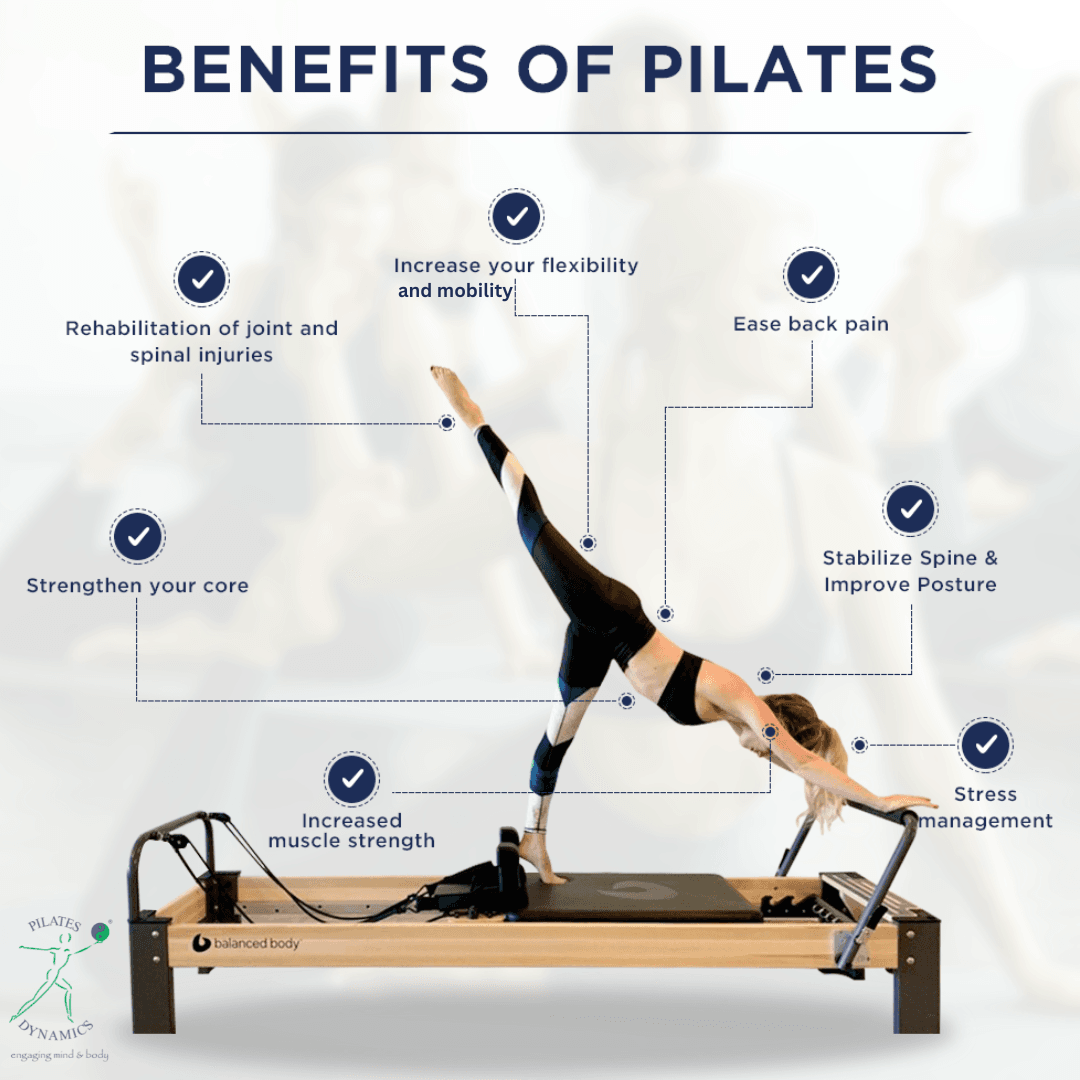
    In addition to aligning, your body’s structure and supporting your joints, Pilates is an ideal low impact exercise that builds optimal strength through muscle balance. What may seem simple can be deceptively challenging and incredibly effective when done correctly.

    When Pilates is practiced consistently, the strength you gain is nonrigid and balanced between strength, mobility and flexibility.

    What is involved in a typical Pilates class

    Pilates exercises can be done on a Mat with small equipment like a TRX, Bosu, Big/Small Balls, Weights, Bands, Kettlebells, Rings, etc.  It can also be done on Large Machines like the Reformer, Cadillac, Towers, Wunda Chairs, and Ladder Barrels.  These machines work with spring tension.  An added benefit is that the Reformer also has a Jump Board, so cardio can be included in your workouts.

    A typical Pilates class involves a 55-minute workout class.  The program is usually structured in such a way that you get a full body workout.  Intensity levels vary from medium to difficult, depending on the client’s ability and objectives.  Will I sweat during a Pilates class?  Yes, definitely – the objective is to challenge your body without harm.

    5 Benefits of Pilates

    1. Improved body awareness.

    In addition to improving proprioception and body awareness, Pilates is a mind-body practice. A lot of attention is paid to the muscles working, the sensations you feel while working, and your breathing pattern, understanding where to place your limbs in space and allowing one to be more aware of their body as they move and do daily activities.

    A person with enhanced body awareness is less likely to get injured or fall because the body responds better to stimulus. To be in tune with your body, you must improve your body awareness.

    1. Improved posture

    Pilates allows you to align your spine, maintain an ideal range of motion at your joints, and have a strength and flexibility balance between opposing muscles that will help you maintain a good posture.

    1. Improved core strength

    In Pilates, the core plays a key role – the center of the body from which all movement originates. The core is composed of all the muscles surrounding the trunk, which supports and stabilize it when pliable and strong.

    The Pilates method improves core strength and function. As a result of core strength, back, neck, shoulder and hip pain are reduced, pelvic floor dysfunction is reduced, and explosive movement is derived from it, thus the nickname “the powerhouse.”

    1. Reduced joint pain

    Both the upper and lower back are supported by Pilates’ deep abdominal muscles and pelvic floor. They lift and support the organs and protect and stabilize the back like a brace. The muscles contract and release during Pilates, strengthening the pelvic floor, spine, and other parts of the body.

    1. Enhanced sports performance

    The benefits of Pilates can be felt by anyone who exercises regularly, whether you are a professional athlete, a weekend warrior, or an avid gym-goer. Balance is achieved through Pilates, which strengthens muscles, mobilizes rigid areas, and lengthens tight ones. As a result, you are able to react faster and prevent injuries.

    Pilates also focuses on strengthening the smaller muscle groups which are often neglected allowing your musculoskeletal system to function optimally. Pilates will help to enhance muscle control and strength in your back, limbs, and the sides of your body. With every movement, you build on stamina and improve physical coordination and balance which improves sports performance.

    1. Prevent Injury

    Pilates helps prevent injuries by keeping the muscles in balance, strengthening your core and – perhaps most importantly – enhancing body awareness, co-ordination and mental concentration.  Pilates is also a great rehabilitation tool, which is why physiotherapists and biokineticists add a Pilates qualification to their existing qualifications.

    How does Pilates training fit in with any other fitness and strength training regime

    Pilates is the ideal training method for any type of sport or activity – or non-activity – at any age.  Learning about the correct placement of the body and limbs, the correct muscle recruitment and alignment, will assist with any type of fitness regime and prevent injury.  Whether this is just daily duties and movement or sport-specific movement.

    Creating harmony in terms of strength, mobility and flexibility in the body makes for good quality movement and performance.  Top sports coaching always involves Pilates training for this purpose.

    How do I get started with Pilates training

    Contact Pilates Dynamics on: 072 999 2229 or 011 792 5459 or email us on: info@pilatesdynamics.co.za to book your first “try-out” class.

    It will make you wonder why you have not started earlier.

  • Health Benefits of Pilates I Realised at Pilates Dynamics

    Health Benefits of Pilates I Realised at Pilates Dynamics

    Exercising is such a personal journey and we all do it for different reasons ranging from weight loss, improving core strength, muscle building, practicing for a race or just to simply get some personal time away from our busy lives.

    I started doing Pilates because I wanted to jump on a band wagon but now, I realize that I had so many problems that needed correction and doing Pilates at Pilates Dynamics has helped me with that. My wife and I are both athletes for about 10 years now and we started Pilates about 4 years ago at Pilates Dynamics and I can tell you this was the best decision we ever made as Pilates have aided our bodies to prepare for athletics in so many ways.

    Core strength

    When we started, we thought we were very fit because of all the weightlifting we did at the Gym, but we quickly realized that we had weak core strength. Having great core strength is important as it helped decrease my back pain. My wife says that her pelvic floor dysfunction has significantly dropped. Big movements come from our core, and it is important to make sure that you have good core strength.

    Posture

    I used to have such bad Posture as I always used to slouch when I sit down. As a young man, my parents always used to tell me to sit up straight but it was not that I did not want to, I just felt like my body did not allow me to. I even started thinking that good posture is something you are born with, but Pilates have shown me something different as in our classes.  Our Instructors at Pilates Dynamics quickly noticed my slouch and incorporated work outs that helped me fix this using their great array of Large Equipment like the Reformer, Towers, Wunda Chair and even some Mat Work with the big and small balls. The way our instructors cued during our sessions was so perfect it became easy for me to correct that bad posture over time and now, it is a thing of the past.

    Pilates help to prevent Injuries

    Being an athlete means that you are going to injure yourself many times because of all the hours spent at the gym and preparing for competitions. The goal is to make sure you do not get injuries that disqualify you from competing in case of a possible injury.  We quickly learnt that Pilates balances muscles of the body so that they are not too tight and rigid or too loose as this makes the body more vulnerable to injury. Pilates enable your body to stabilize your joints while moving.

    It is safe to say that we have learnt a lot from doing Pilates at Pilates Dynamics over the past couple of years. You can also share your Pilates Journey with Pilates Dynamics for weekly uploads so that we all educate others through knowledge from experience – as they say, “Experience is the best teacher”

    How do You book Classes at Pilates Dynamics?

    call 0729992229 or email info@pilatesdynamics.co.za

    https://www.youtube.com/watch?v=uA5kP6fkmEk

  • Beginner Pilates Classes in Johannesburg: Can a Beginner Do Reformer Pilates?

    Beginner Pilates Classes in Johannesburg: Can a Beginner Do Reformer Pilates?

    If you had asked me 5 years ago what Pilates was, I would have never had an answer for you.

    Recently, I started seeing Pilates become a trend on social media and just like anyone else I felt the need to join. I went to my nearby gym and booked myself in for classes and it is safe for me to say I did not enjoy it at all. I did not know what I was doing, and it was just very difficult for me to try and learn by watching 20 other strangers doing it. There was no one to correct my form and I was hearing a bunch of words I had never heard before. The class was filled with so many athletes, people who do CrossFit, runners, ballet dancers and so many others. I tried my best to continue and after a month, I just gave up and decided Pilates was not for me because at this point, my back was hurting, and I felt a lot worse than I did before I started.

    I thought my Pilates Journey ended there, but one day while scrolling through Instagram I found the Pilates Dynamics Page and from the pictures, the private Pilates studio looked good. I decided to book for an orientation and just go. I got there and I was shown around the studio which is lovely and well-equipped. The instructors were great and very hands on with me. I quickly realized that my form was worse than I thought and after a month at a gym, this was never corrected – I was just doing anything and everything. I was so hesitant to join Group classes because of my previous experience at the gym.

    I found out that classes have a MAXIMUM OF 8 PEOPLE FOR THE PILATES MAT & SMALL EQUIPMENT CLASSES and the PILATES LARGE MACHINES (Reformer and other machines) CLASSES HAVE A MAXIMUM OF 5 PEOPLE. The instructor was able to move around the Studio to teach and correct everyone who needed help. May I also note that there was a lot of space in between people and lots of space between the Pilates Reformers and other Pilates machines, like the Pilates Towers, Pilates Chairs, and Pilates Cadillac, which also helps to do a lot of different types of movements when there is sufficient space. The Pilates Instructors offer a modification to each exercise, so this was perfect for me. It has been 3 years now and I attend classes 2 times a week at Pilates Dynamics Studio – and I love it!!

    What equipment does Pilates Dynamics Studio have?

    Unlike any other gym I know, this studio boasts 3 fully equipped studios.
    The Pilates Large Machines studios contain equipment like; PILATES REFORMERS; PILATES WUNDA CHAIRS; PILATES TOWERS; PILATES LADDER BARRELS; SPINE CORRECTOR BARRELS; and PILATES CADILLACS.
    The Pilates Mat & Small Equipment classes incorporates equipment like the; TRX; BALLET BARRE; BOSU’s; KETTLEBELLS; BIG BALLS; SMALL BALLS; WEIGHTED BALLS; THERA-BANDS; YOGA EQUIPMENT; FREE WEIGHTS; MEDICINE BALLS; TRAMPOLINES; and a variety of PILATES KIDS EQUIPMENT.

    Does Pilates Dynamics offer any specials on Pilates Classes?

    Pilates Dynamics always have specials running to introduce people to the “real deal”, i.e., the correct way of doing Pilates, which is based on science and functional training.

    How do I get started with Pilates?

    Contact Pilates Dynamics: 011-792 5459 or 072 999 2229 or email: info@pilatesdynamics.co.za to book your first class. Beginners are welcome! Their well experienced and knowledgeable Pilates instructors will take good care of you. Take my word for it!

  • What Does a Pilates Reformer Do? Is Reformer Pilates Good for Beginners?

    What Does a Pilates Reformer Do? Is Reformer Pilates Good for Beginners?

    The Pilates Reformer and Jumpboard

    A reformer is defined as someone who makes changes to something to improve it. I think it is only fair to conclude that Joseph Pilates was a reformer, no pun intended.

    Joseph Pilates invented many pieces of equipment to advance Pilates as well as the overall wellbeing of himself and others using apparatus in Pilates. The equipment invented by Joseph Pilates included a Wunda Chair, Cadillac, Towers, and the world-famous Reformer – just to name a few.

    What is a reformer?

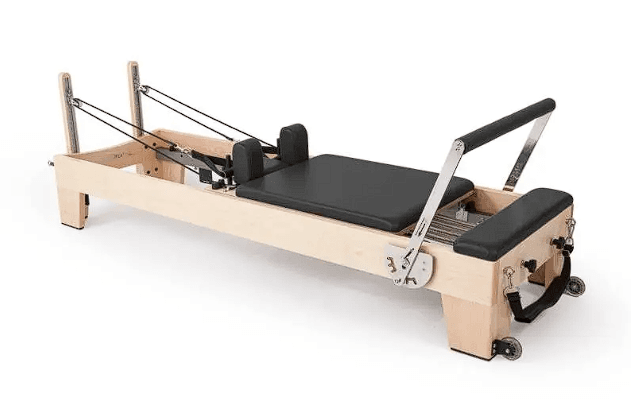
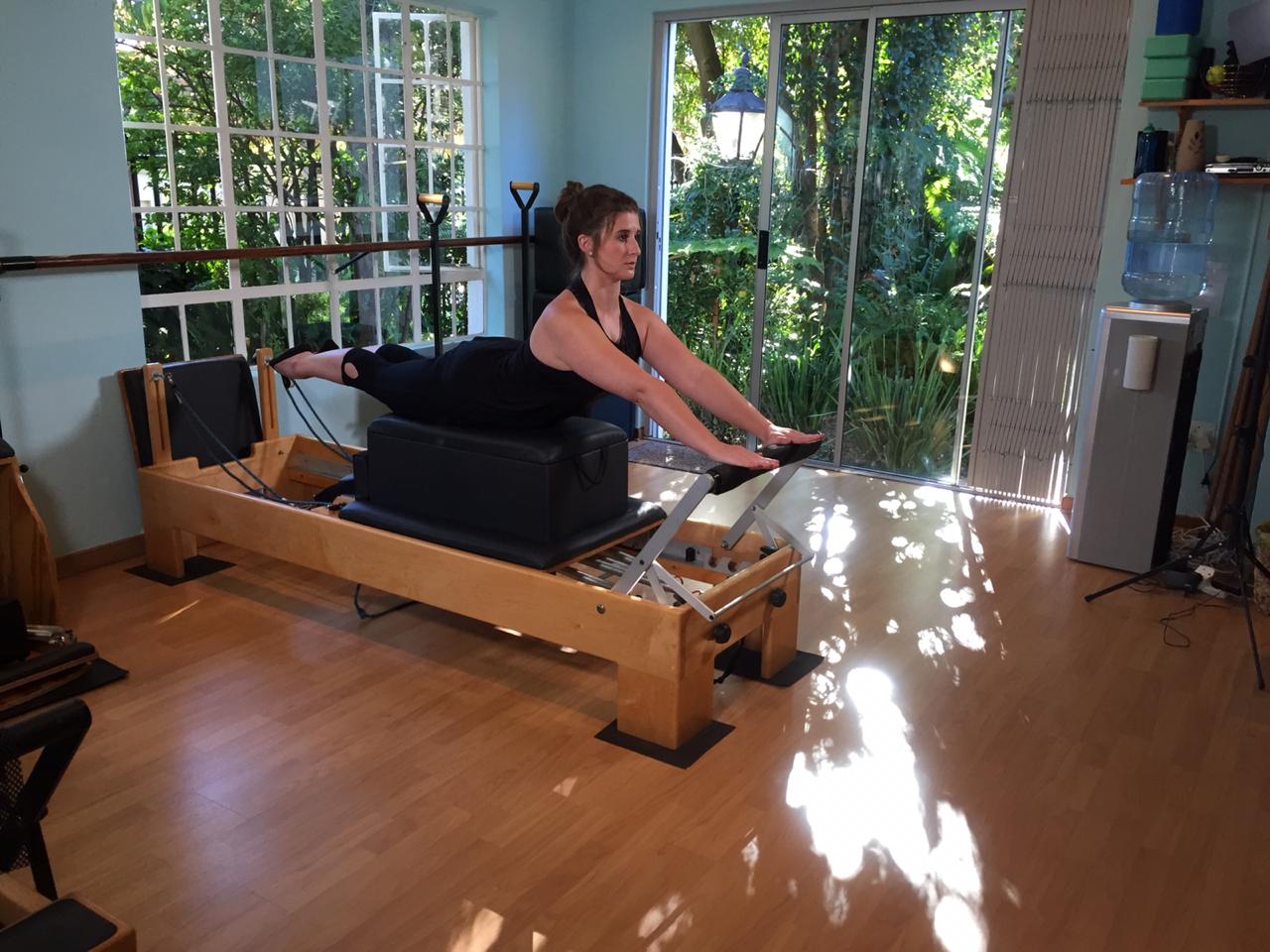
    A reformer is a bed-like frame with a flat platform that rolls back and forth on wheels.  Attached to the reformer are springs of different colours that provide different resistance levels during exercises. The reformer includes different forms of attachments which allows one to work different parts of their body with creativity with attachments that include handles, loops, and a jump board.  The best of all is that a Jump board can be added to the Reformer to enable plyometric exercises.

    What is Plyometric exercises?

    Plyometrics include different types of exercises, like pushups, throwing, running, jumping, and kicking. Athletes often use plyometrics as part of their training, but anyone can do these workouts.

    What is a Reformer Jumpboard?

    A jump board allows one to add low-impact plyometric exercises to the pilates session.

    The jump board is a padded pad that replaces the foot bar on the reformer and it provides an excellent non-weight bearing exercise like a trampoline, for the upper and lower body as well as core strength.

    The benefits of reformer jumpboard:

    1. Low impact

    Just like using a rebounder, one will receive aerobic benefits at a low impact protecting the knees and back from the jarring impact of landing.  Low impact exercises are beneficial for you because they are joint-friendly keeping the joint healthy, it promotes healing and recovery by keeping the joint mobile and increasing the joint strength.

    1. Calorie burn

    Jump board reformer results in one burning a lot of calories due to the aerobic component.

    1. Increase in blood circulation

    Blood circulation is responsible for moving nutrients as well as oxygen from one part of the body to the next. During the pilates jump board session the heart rate and breathing rate increase, your organs become more efficient at circulating oxygenated blood and nutrients to the rest of the body. This will result in your recovery after workouts being faster and improved blood circulation.

    1. Improve bone health

    Beneficial for bone health alignments such as osteoporosis. The jump board is also found to provide relief for ankle and knee issues.

    1. Strengthening

    The heavier the springs the more leg work with special attention to power. The lighter the springs more abdominal work and control. Light springs fire up the deep stabilizers encouraging stability in the pelvis, core, and spine.

    1. Endurance and stamina

    Reduction in fatigue, your energy levels are bound to increase.

    1. The mind

    Mastering jumping horizontally on the reformer bed and learning new moves and sequences is training your brain, improving your memory and cognitive function. The jump board also encourages deep breathing which does wonders for the nervous system.

    1. Improves coordination and flexibility.

    You will learn to move and use your body effectively and do multiple movements to improve co-ordination.  Strength, flexibility, and mobility are key factors that are included in a jump board Pilates session.

    Why Pilates Dynamics Studio?

    Pilates Dynamics not only offers client training sessions, but we also offer Pilates Instructor Courses, which includes Pilates Reformer Courses.  At Pilates Dynamics you will get exposure to all the Pilates machines, including the Cadillac, Towers, Wunda Chairs, Ladder and Arc Barrels and a host of other smaller equipment.

    Pilates Dynamics is a leader in international Pilates Instructor course tuition and training, so you can have total peace of mind that our Pilates instructors have expert knowledge, training, and experience.  You are therefor in safe hands.

    Ready for a Pilates Reformer Session?  

    Book a FREE trial Pilates Reformer session.

    Ready to sign up for our Pilates Reformer Instructor Course?

    Introducing the Reformer to your clients in your studio, gym or practise is one of the best strength and fitness training apparatuses you can add.  The beauty of reformer pilates is that it is for everybody and there is a modification for everyone.  Reformer Pilates is good for everyone from supermodels to athletes and even those who have sustained physical injuries befits from Reformer Pilates classes.

    For more information contact us here to book your Pilates Reformer course: 0729992229/ 0117925459 or email info@pilatesdynamics..co.za

  • How Long Does It Take to Correct Posture with Pilates?

    How Long Does It Take to Correct Posture with Pilates?

    DOES YOUR POSTURE AFFECT HOW PEOPLE SEE YOU?

    Posture affects how people perceive you.  Just as someone with good posture sends nonverbal signals of confidence, healthy, resilient, powerful and energetic.  This person stands tall with their shoulders down and next to their bodies and head held high.  Assessing their body language, our perception is immediately that this is a successful and responsible person who acts with integrity.

    On the other end of the spectrum, people with poor postures demonstrates rounded shoulders, rounded upper back, and a hanging head.  A person with this posture appears uninterested, tired, lethargic, timid, weak, incompetent and uncertain.

    When we meet with clients, colleagues, or potential bosses, the poor posture is definitely not an impression we want to create.  A person with good posture (head up and shoulders back) will not only improve your health but have an impact on your chances of success.

    We often use the phrase “sitting is the new smoking” and a lot of people in South Africa and around the world spend a lot of time sitting.  In addition to the health issues associated with a sedentary lifestyle our bad posture can affect our health, mood, productivity and success.

    Let us ask ourselves this question, how many slumping CEO’s have you seen? Picture yourself walking into a room.  What is the first thing you are likely to do?  Of course we start making assumptions about the people in the room.  We start looking at a persons’ clothing and their physical appearance.  Apart from that we start interpreting their body language and this is where posture fits in, as it gives an indication of their personality.

    What are poor posture patterns?

    Feet:

    When it comes to posture correction, it is important to consider every aspect of the body, from the position of the feet, to the tilt of the head.

    Flat feet or high-arched feet; pronation and supination are posture problems that can cause your entire biomechanics chain to go out of balance.  The position of your feet, legs and knees changes the way they distribute pressure and weight.  Gait abnormalities can cause strain on your entire body.

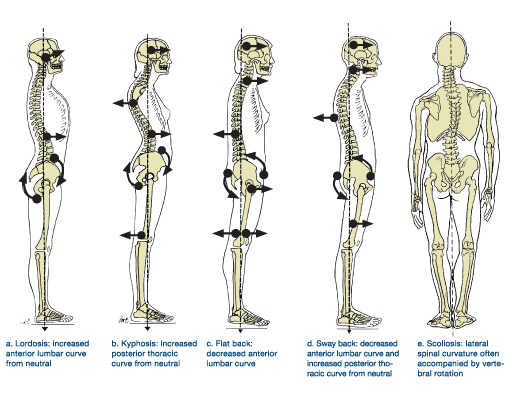
    Kyphosis: (Hunchback)

    We sit for long periods of time each day, which has a bad impact on the posture and creates this rounded upper back and shoulders syndrome.  This slouched back posture is also created due to a lack of energy and poor sitting habits.

    Flat Back: (reduced curve in the upper and lower back)

    Muscle imbalances in the body because of poor sitting habits and/or long hours of sitting at our desks, can result in this posture. Hip flexors are long and weak, low back extensors are weak, hamstrings, glutes and rectus abdominals are short and tight.

    Hyperlordosis: (increased curve in the low back)

    Muscle imbalances in the body because of poor sitting habits and/or long hours of sitting at our desks, again can result in this posture. This posture is associated with long and weak abdominals, tight hip flexors, tight aback extensors and long and weak hamstrings and glutes.

    Sway back: (fatigue)

    This is referred to as the “tired” or “lazy” posture. This posture is often caused by tight hamstrings and back muscles, weak abdominal muscles and laxity in some of the pelvis and back muscles.  Sitting for long periods of time can cause these muscles to tighten.

    In Summary:

    Short, sitting for many hours with poor posture may turn off your stabilizing muscles such as your back muscles, glutes and abdominals.  When these muscles are not regularly activated and used, it can lead to weakness and poor posture.

    What can we do to change our postures?

    • We need to engage in postural corrective exercises, to correct muscle imbalances in the body.
    • If you have a job that requires a lot of sitting, take regular breaks to move and stretch throughout the day.
    • Surround yourself with people in a healthy environment.
    • A few lifestyle changes can affect your physical as well as your mental health. Posture also affects confidence in your own opinions and abilities.

    What is the best exercise method to correct poor postural habits?

    Pilates is known to be an excellent method to correct posture.  Not only does it improve posture, but it also brings an awareness of where our bodies are in space and reminds us during the day to keep moving and fixing our postures.  Pilates is a full body workout and therefore an additional benefit is a toned, strong and flexible body.  Many people claim that they have become taller by doing Pilates.  Now you too can get that taller and toned look by doing Pilates.

    How do I get started with Pilates?

    Contact Pilates Dynamics on: 011-792 5459 or 072 999 2229 or email us on: info@pilatesdynamics.co.za to book your first class.  Beginners are welcome!  Our well experienced and knowledgeable Pilates instructors will take good care of you.

  • Is Pilates for Beginners? Beginner Classes in Randburg

    Is Pilates for Beginners? Beginner Classes in Randburg

    Then here are a few things you need to know before you book to take up Pilates Classes at Pilates Dynamics. (It may just become your new favourite workout)!!!!

    If your fitness routine has been feeling a little stale or you feel like a change, taking up a Pilates class might be a good way to make any fitness routine feel fresh again. A Pilates class is a good way to expand your fitness horizon, whether you take up a Pilates Mat class or a Pilates Reformer class. 

    Pilates is extremely versatile, meaning that it can be adjusted to for any age and fitness level. If in-studio or in-person gym exercise is not something you feel comfortable doing right now, there are plenty of live streaming virtual (online) Pilates classes at Pilates Dynamics. 

    Regardless of which option you choose to attend classes, trying Pilates can be a workout game changer, no matter your fitness background.

    “Pilates will meet anybody’s needs to improve their movement and at the same time make it extremely challenging”, says Andriesa Verloop, Director of Pilates Dynamics Training & Education Centre in Randburg, Johannesburg. “There are so many variations and modifications of the same exercise, that it always stays fresh.”

    Want to know what Pilates is all about? 

    Here are a few tips that a Pilates beginner needs to know to enjoy their first class. 

    What is Pilates?

    Pilates is a form of low-impact exercise that aims to strengthen muscles while improving postural alignment and flexibility. A typical Pilates workout tends to be around 50 minutes to an hour long, says Andriesa Verloop, Director of Pilates Dynamics Training & Education Centre in Randburg, Johannesburg. 

    The great thing about Pilates is that you can do it with or without equipment. However, the movement needs to be slow, precise, and controlled, with breathing patterns that supports muscle function. 

    Pilates does not only target the core, Pilates is a full body workout. Pilates is not restricted to specific body parts. When we refer to the core or abdominal muscles, it is important that clients know that the core includes the entire trunk, which is made up of the abdominals, back, hips, inner and outer thighs.  As Pilates instructors we will also add in moves to engage areas like your arms, glutes, and lower legs. You can therefore expect a workout that works your entire body. 

    What are the benefits of Pilates?

    Andriesa Verloop says that “Pilates is a full-body exercise method that will help you do everything better,”. Andriesa further goes on to say that Pilates strengthens and stabilizes your core, which after all is the foundation, from which you can move efficiently while improving your posture, flexibility, and mobility.”

    If you are looking for functional movement, the kind that helps you move better on a day-to-day basis with everyday tasks, Pilates can train you in that. A 2018 study of 90 people published in the Journal of Exercise Rehabilitation found that participants who practiced Pilates for one hour three times a week for eight weeks improved their scores on a functional movement screen, which measures things like balance, stability, and mobility, more so than people who did Yoga.

    Then of course there are the muscle benefits—especially in the field of endurance. One 2010 study published in the Journal of Strength & Conditioning Research found that people who did one hour of Pilates twice a week for 12 weeks reported significant increases in abdominal endurance, hamstring flexibility, and upper-body muscular endurance. The researchers theorize that the scapular and pelvic-lumbar stabilization cues throughout the moves (when you are told to bring your shoulder blades together or down your back and preventing miss-alignment in the lower back and pelvis), combined with the increase in core strength and endurance, can translate to upper-body strength improvements.

    In addition, Pilates has also been found to have a beneficial effect on mental health, hence being referred to as a mind-body connection, which is enhances both physical and mental endurance. A 2018 publication of eight Pilates studies found that those who practiced Pilates reported a reduction in symptoms of depression and anxiety as well as fatigue.

    Ready to start a Pilates class? 

    Here are a few things to keep in mind for your first class.

    1. Pilates can require equipment, but not necessarily. 

    At Pilates Dynamics, we offer 2 types of classes:

    1. Pilates Mat & Small Equipment classes. Exercises are done on a Mat – thicker than a Yoga Mat – to provide support. For on-line Pilates classes the Pilates Dynamics Instructor will assess what equipment the class participants have. If you do not have any equipment, the Pilates Instructor will either do a class without any equipment and with the use of your own body weight. Alternatively, the Pilates Instructor will let you know before class to bring a towel, ball (soccer ball), pillow or filled water bottles to act like weights.
      For In-Studio (in-person) Pilates classes, you do not have to bring any equipment, as Pilates Dynamics is a fully equipped Pilates and Yoga studio. We use an array of small equipment like Thera-bands; Rubber bands; Balls; BOSU balance trainers; Balls; Weights; Kettlebells; TRX Suspension trainers; Ballet Barre; and Trampolines to name but a few.
    2. Reformer classes are done on a machine called a reformer, which is a sliding platform complete with stationary foot bar, springs, and pulleys that provide resistance.
    3. Large equipment classes are done on a variety of Pilates Large machines, including the Reformer, Towers, Wunda Chairs, and Barrels, complete with spring tension that provides resistance. 

    Reformers, Towers, Cadillacs, Wunda Chairs use spring tension as resistance with the goal of strengthening and isolating the right muscles. Your goal should be to take your time with the exercises, focus on the task at hand, and connect to your breath.

    The Reformer and other Large Pilates Equipment experience is maybe the most fun you will have in a Pilates class. These machines give you added resistance and a sliding or lifting surface that challenges your workout. It often feels like you’re flying, levitating, or gliding.”

    In most Pilates Large Equipment class settings, you will typically use the Reformer, the Wunda Chair, Barrels, and a smaller version of the Cadillac called the Tower.  Andriesa Verloop advises beginners to take a few private lessons, if possible, to safely learn how to use the equipment before signing up for a group class.

    Regardless of what class you choose, make sure to let your instructor know you are a beginner. This way, they can keep an eye on you throughout the class and offer modifications or form adjustments.

    2. Many beginner classes will feature the same group of exercises in each class.

    There is a repertoire of Pilates exercises that are common in beginner classes. Then as you get familiar with the moves, your Pilates class can build on them, offering progressions to continue to challenge your muscles. For example, the Pilates Hundred exercise can be enhanced with a ball between your ankles or a Pilates Ring, to add more connection to your midline and can challenge your stability. 

    3. You can get a good Pilates introduction at home, virtually/on-line.

    If you feel more comfortable trying out a new exercise modality in the comfort of your home rather than joining and in-studio or in-person class, you can get started with Pilates live virtual/on-line classes hosted by Pilates Dynamics that only employs professional and well-qualified Pilates Instructors.

    Live On-line classes can be very ground-level and authentic will immediate and ongoing feedback from the Pilates Instructor. 

    Pilates Dynamics offer an array of Pilates and Yoga online and in-studio classes both in a group or if you feel more comfortable, you can do the class privately or with your wife or husband or family members.

    4. You will feel your muscles burn during class, and you might be sore the next day.

    While you may not be crushing high-intensity exercises like jumping squats or lifting heavy dumbbells, the bodyweight routines that Pilates classes offer can be very intense. 

    Dedicating your entire focus to even the smallest movements means that you will work the muscles that each exercise intends. That means you can be dealing with delayed-onset muscle soreness after your workout.  In addition, you will find soreness in muscles that you did not know you had, as Pilates tends to isolate muscles well.

    5. There is a special use of language and terminology involved.

    A great teacher will use cues in a way that brings your anatomy and movements to life. The connection of hearing the words, visualizing the exercise, and performing it can be transformative and inspiring—and like learning any new language, there is always lingo.

    For Pilates, you need to know that your powerhouse refers to the centre of the body, where all of your power comes from to execute movement. Peel through your spine or articulating your spine, means slow movement from vertebra to vertebra. You will probably also hear some instructional phrases like Cradle your head in your hands,(allowing your neck to be supported by your hands and arms) Tuck your chin towards your chest or Create a little double-chin (to initiate your deep abdominal muscles and take the work out of the head and neck. Another important phrase is Slide your shoulder blades down your back, to take the work out of the shoulders and focus the work towards the abdominals. And to mention another important phrase, is keeping a neutral spine and pelvis, to ensure that the lower back and hips are in the correct position to ensure optimal use of the muscles and to prevent compensation of other muscles.

    Do not be concerned though, as you will get used to them with time.

    6. The right clothes can make you more comfortable.

    It is important to wear more body-hugging clothing options for Pilates classes. This way, the instructor can see your movements better and your clothes don’t get caught in springs or other equipment. 

    As for footwear, you can wear socks for your session, and preferably non-slip socks. 

    7. Pilates should be a part of a well-rounded workout routine.

    Andriesa from Pilates Dynamics suggests that you do not do a class every day as your body needs a day or two to recover from fatiguing resistance exercise like that of Pilates. 

    Pilates stretches, strengthens, and aligns your body all at the same time. Pilates also complements every other fitness endeavour, because it prepares your body to move better in every way. Adding it into your fitness routine will help you lift heavier weights, run faster, swim with better form, or even achieve that elusive arm balance in yoga.”

    Although you can easily go overboard with Pilates, resist the urge to make it your only exercise. Cross-training (like taking the time to run, swim, or weight training, in addition to Pilates) is important, no matter which exercise modality you consider your main type.

    As a runner, the stretch and lengthening from Pilates will help with off-day recovery and injury prevention. For those same reasons, it can be the perfect complement to free-weight training or any other sport.

    8. It’s important to guard against injury, especially when you’re just getting started.

    Mild or moderate soreness isn’t serious, nor is it something to worry about, but it’s possible that you can injure yourself with Pilates. Overdoing it on Pilates, especially if you are new to Pilates or exercising in general, can over-stress your muscles, particularly if you don’t give them ample recovery time before your next class.

    Lower back strain—think, an achy or sharp pain in your lower back, which can radiate down your butt and thighs—can be a common Pilates injury, especially if your form is not correct during the moves. You may also experience rotator cuff tendinopathy, where you may feel pain and reduced mobility in your shoulder joint as you move, which can be a result of repetitive movements. Whatever the injury, if you feel pain or impeded mobility that persists past the day or two of simple delayed-onset muscle soreness, you should pause your Pilates routine and consider seeing your doctor or physical therapist.

    Nobody can prevent injury in any kind of exercise, but there are some ways in which you can protect yourself when getting started with Pilates.

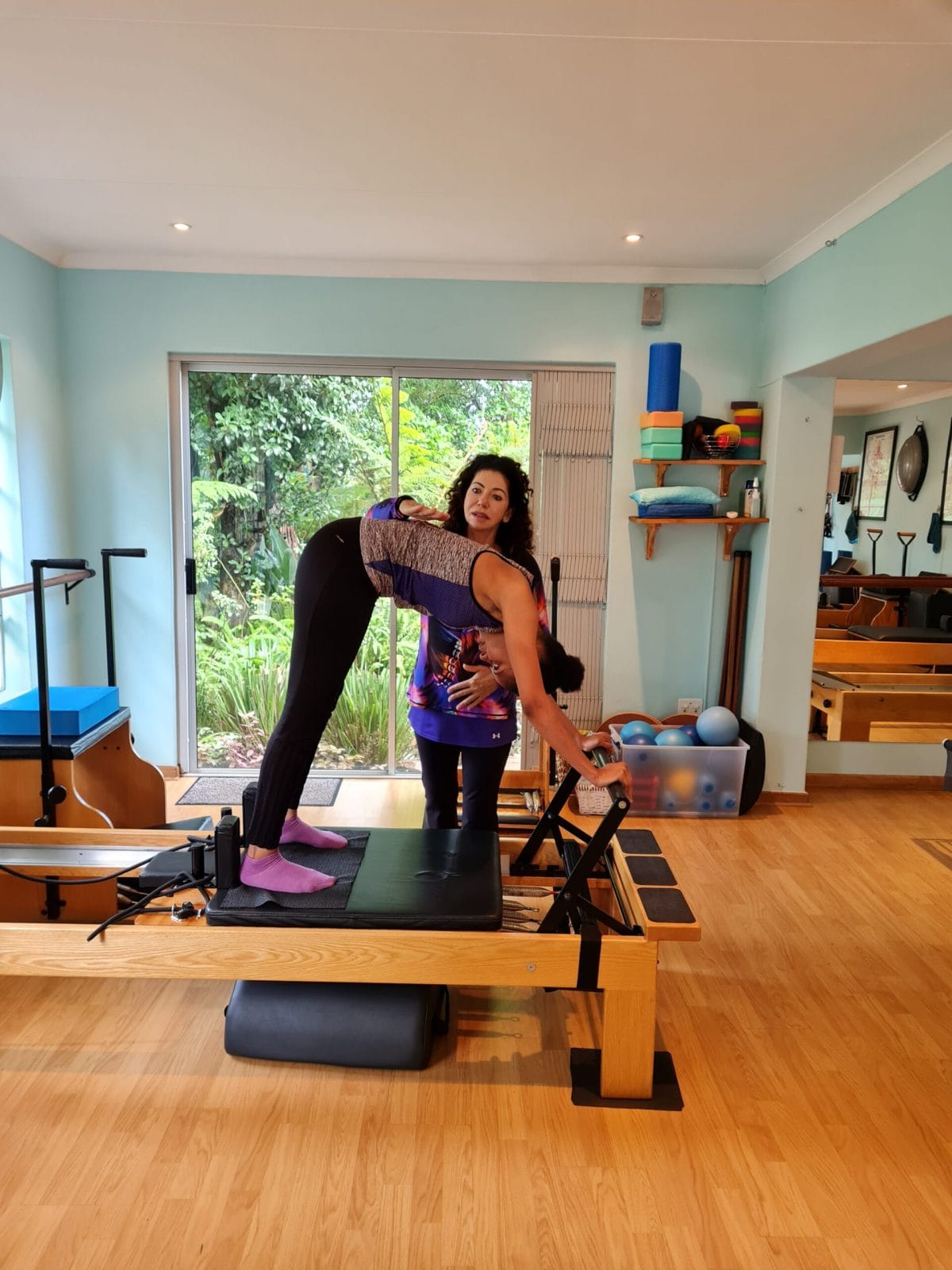
    At Pilates Dynamics we offer a first private session referred to as an Orientation session during which we teach you the fundamentals of Pilates, take you through some of the basic exercises, and teach you the Pilates breathing pattern as well as how to recruit your muscles correctly and the principle of disassociation (moving a limb without the rest of the body moving). This also offers the ideal opportunity for your well-qualified Pilates Dynamics Instructor to assess your level of fitness and body awareness, before placing you in a group class setting. You may or may not be requested to book a few private classes to ensure that you can migrate to a group class, safely.

    Are you ready and more prepared now to book and start your Pilates classes at Pilates Dynamics?

    What else does Pilates Dynamics offer?

    Pilates Dynamics also offer Internationally Recognized and Certified Pilates Instructor Teacher Training courses and programs. So, you can rest assured that you are in good hands!!

     Courses are offered live online (virtually) AND in-studio (in-person) and come complete with a video library of all the exercises taught in the manual, access to pre-recorded Pilates classes, and access to tests. All courses and workshops have been allocated CPD (Continuing Professional Development) points.
  • What Are the Signs of a Weak Pelvic Floor? Pelvic Floor Muscles and Pilates

    What Are the Signs of a Weak Pelvic Floor? Pelvic Floor Muscles and Pilates

    What are pelvic floor muscles?

    The pelvic floor muscles give us the ability to control the release of urine, faeces, and the passing of wind – and to delay the process until it is convenient for us.
    Why are the Pelvic floor muscles so important?
    Apart from the above important functions like urinating, defecating and the passing of wind, the pelvic floor muscles support the bladder, uterus, and bowel. Pelvic floor muscles support incontinence of bladder and bowel prolapse and are also important for sexual function in males and females.
    In males the Pelvic muscles are important for erectile function and ejaculation. In women, voluntary contractions (squeezing) of the pelvic floor contribute to sexual sensation and arousal. The pelvic floor muscles in women provides support for the baby during pregnancy.
    The Pelvic floor muscles stabilizes the joints of the pelvis including the sacroiliac joint and provides support for the rectum, the prostate and urethra in males and the rectum, vagina, and urethra in females. Simultaneous contraction of the pelvic floor and the diaphragm also serves to maintain the abdominal contents in the abdominal-pelvic cavity.

    What is the Anatomy of the pelvis?

    The pelvic floor forms the base of the group of muscles commonly referred to as the “core”. These muscles stretch between the coccyx and front of the pelvis and between the lateral walls of the pelvis. These layers form a hammock from the pubic bone at the front to the tailbone at the back and spans and from one sitting bone to the other side, in other words “side-to-side”, hence the reference of a “hammock”.
    The pelvic floor muscles are made up of slow (endurance) and fast twitch (power) fibres. It requires the combination of both slow and fast twitch fibres for the pelvic floor to work. It is also important to also understand the interrelationship between pelvic floor and abdominal muscles.
    What is the relationship between pelvic floor and abdominal muscles?
    Co-contraction of the abdominal muscles and the pelvic floor muscles are important when teaching pelvic floor exercises as abdominal muscle activity can assist pelvic floor activity.

    The Pelvic floor muscles are made up of:

    The Puborectalis, pubococcygeus, iliococcygeus and ischiococcygeus.
    When abdominal muscles contract, the pelvic floor muscles responds in the following way;-
    •The Pubococcygeus contracts with the transversus abs.
    •The Iliococcygeus contracts with the obliques
    •The Puborectalis contracts with the rectus abdominis.

    What are Pelvic Floor Muscle Exercises?

    The pelvic floor muscles can be trained with regular and specific exercises. Firstly, we need to understand how to correctly identify our pelvic floor muscles and to actively recruit these muscles prior to movement and exercise.
    This is where Pilates come into the picture. Pilates is great for your pelvic floor, as it teaches you how to engage and strengthen it during every minute of your class. Pilates teaches you to activate your pelvic floor muscles prior to – and during exercise.

    Do I need any previous Pilates experience to join a class?

    Not at all! If you are a beginner, you can join Pilates classes. Prior to joining the Pilates group classes, we will set up a private Pilates class for you during which we will teach you the basics of Pilates, muscle recruitment and correct body alignment to prepare you for the Pilates group classes. Pilates group classes are small. We take a maximum of 8 people per class, to ensure quality training.
    Should you need to do a few private classes prior to joining a group class, that can also be arranged.

    How do I book Pilates classes at Pilates Dynamics?

    Contact us on: info@pilatesdynamics.co.za
    Phone us on: 072 999 2229 or 011-792 5459
    WhatsApp us on: 072 999 2229

  • My Pilates Journey, by a Pilates Instructor

    My Pilates Journey, by a Pilates Instructor

    It all started with a 15th birthday gift.

    At the age of 15 I started blabbing endlessly about how exercise made me feel and how I had found peace in discovering new forms of exercise, my friends at the time shared no similar interest but they listened.

    On my 15th birthday my friend gifted me with a Pilates kit which included a manual, soft ball, mat and a CD. I had no idea what Pilates was at the time but I recall the excitement building up inside me as I anticipated learning a new form of exercise.  I distinctly remember trying the first few exercises and being hooked immediately. I started to notice changes to my physical body appearance such as improved posture, body awareness, and overall strength, and the bonus was that I lost centimeters!

    On top of this, I fell in love with the mind-body connection, which kept me completely focused in the session. I started reading more about Pilates and discovered a host of benefits it holds. I recall putting my phone down for a second and thinking “well this is amazing, let’s do it every day”.

    I was that girl who would forget to do her homework but never forget my Pilates session.

    But…

    Like everyone else soon I became preoccupied with other schoolwork.  One week turned into two and we all know how it goes from there. My manual was buried amongst other forgotten books, my soft ball had become a soccer ball and as for my mat – well it made a perfect rag for the cats.

    It was in 2019 when I was reminded again about my love for Pilates. During the completion of my Biokinetics Degree, we had a workshop which focused on the benefits of Pilates and ways in which you can use it during rehabilitation.

    I rushed home that day and searched high and low for my manual. I started reading every exercise and understanding the exercises even better at this point. That was when my journey in Pilates was reinstated.

    Shortly afterwards, I was  presented with an opportunity to complete a Pilates mat course at Pilates Dynamics and went on to work at the studio where I learned that there is so much more to Pilates. I cannot begin to describe the impact Pilates has had on my life.

    So that’s how I got into Pilates. I see myself always incorporating Pilates into my life and helping others find an appreciation for it on their own. Pilates is deeper than just the act of movement; it is a great understanding of one’s body from within. It is not just a superficial experience.

    I highly recommend anyone to do the Pilates Courses through Pilates Dynamics.  The courses are extensive and offers a great understanding of this great exercise method.  For those who has only done the Pilates Mat work course, Pilates Dynamics offer the Pilates Comprehensive Conversion Course which covers an extensive repertoire on all the Pilates Machines like the Pilates Reformer, Pilates Cadillac, Pilates Chair, Pilates Tower, Pilates Ladder Barrel and Pilates Arc Barrels.  You will also get to learn how to incorporate all the Pilates Small Equipment like the Pilates Balls, Pilates Magic Ring, Ballet Barre, TRX, Bosu, Free Weights, Thera-bands, Foam Rollers, Air Cushions, Aerobic Step Barrels, Rotation Discs and many more.  Once you complete this course, you will be Comprehensively qualified.  The Pilates Comprehensive Conversion Course offers an expansive repertoire of Pilates exercises done on the Pilates Large Machines and covers muscle focus, objectives, exercise variations, recommendations, and contra-indications.

    If the Pilates Comprehensive Conversion Course sounds to intimidating, then a good idea will be to do the Pilates Intensive Reformer Course.  The Pilates Intensive Reformer Course offers an expansive repertoire of Reformer Exercises and covers muscle focus, objectives, exercise variations, recommendations, and contra-indications.

    You will be supported throughout your Pilates journey by very qualified and experienced Pilates Instructors.  Pilates Dynamics teaches you how to teach and not only what to teach.

    So don’t delay and contact Pilates Dynamics on:

    011-792 5459 or 072 999 2229 or email Pilates Dynamics on: info@pilatesdynamics.co.za

    There will always be someone ready to take your call and guide you through the process of registering for the courses.