Category: Pilates FAQs

Answers to common questions about Pilates, its benefits and our classes.

  • Neutral Spine vs Imprinted Spine in Pilates: When Does It Matter?

    Neutral Spine vs Imprinted Spine in Pilates: When Does It Matter?

    Neutral Spine vs Imprinted Spine in Pilates is a question any new clients who attend their first Pilates Orientation and Assessment at Pilates Dynamics asks.

    Should I keep my spine neutral, or should I imprint my lower back into the mat?

    The confusion is understandable because many people naturally move into an imprinted spine position during Pilates exercises, regardless of whether it is appropriate for the movement being performed.

    Understanding the difference between a neutral spine and an imprinted spine is essential for improving core strength, protecting the lower back, and performing Pilates exercises correctly.

    In this article, we explain the difference between neutral spine and imprinted spine in Pilates, when each position should be used, and how Pilates instructors teach proper spinal alignment.

    What Is a Neutral Spine in Pilates?

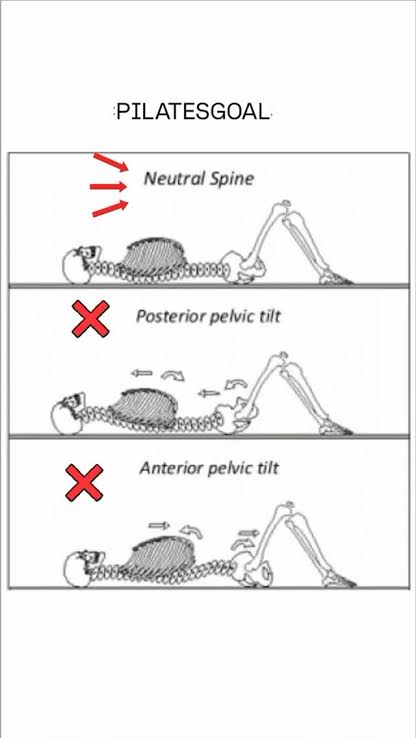
    A neutral spine is the natural alignment of the spine where the pelvis, ribcage, and spine are positioned optimally for stability and movement.

    To find a neutral spine while lying on your back:

    1. Place the heels of your hands on the front hip bones (ASIS).
    2. Position your middle fingers on the pubic bone.
    3. Create a triangle with your hands.
    4. Ensure that the front hip bones and pubic bone are level and aligned horizontally.
    5. Keep the ribcage relaxed so the lower ribs do not lift towards the ceiling.

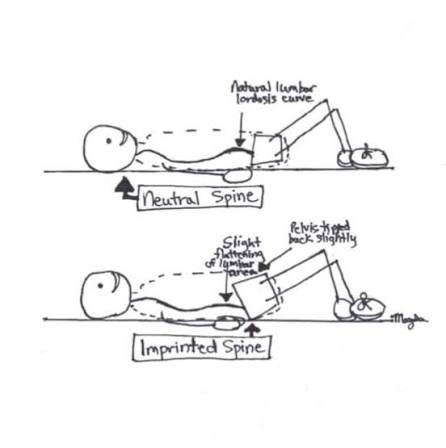
    In a neutral spine position, there may be a small natural space between the lower back and the mat. The size of this gap varies from person to person depending on their spinal curvature, anatomy, and soft tissue distribution.

    A neutral spine does not mean forcing the lower back flat into the mat. Instead, it means maintaining the spine’s natural curves while keeping the pelvis and ribcage aligned.
    Why Is Neutral Spine Important in Pilates?

    Maintaining a neutral spine during Pilates exercises helps create optimal spinal and pelvic stability.

    When the body is properly aligned:

    • The deep core muscles function more effectively.
    • The muscles surrounding the hips and spine work efficiently.
    • Unnecessary shearing or pulling forces on the joints are reduced.
    • Postural muscles can support movement correctly.
    • The risk of discomfort and lower back pain may be minimized.

    Neutral spine is often the preferred position during many Pilates exercises because it encourages healthy movement patterns that can transfer into everyday activities such as walking, lifting, sitting, and standing.
    What Is an Imprinted Spine in Pilates?

    An imprinted spine occurs when the pelvis gently tilts backward, flattening the natural curve of the lower back into the mat.

    This position is often achieved by engaging the abdominal muscles and slightly tucking the pelvis.

    An imprinted spine can provide additional support during certain abdominal exercises, especially for individuals who struggle to maintain spinal stability when their legs are lifted away from the floor.

    When Should You Use an Imprinted Spine?

    Not everyone can comfortably maintain a neutral spine during every Pilates exercise.

    For example, during abdominal exercises where both legs are lifted into the air, some clients experience:

    • Excessive arching of the lower back
    • Reduced abdominal engagement
    • Lower back discomfort or pain
    • Difficulty controlling pelvic alignment

    In these situations, an imprinted spine may be a safer and more effective option.

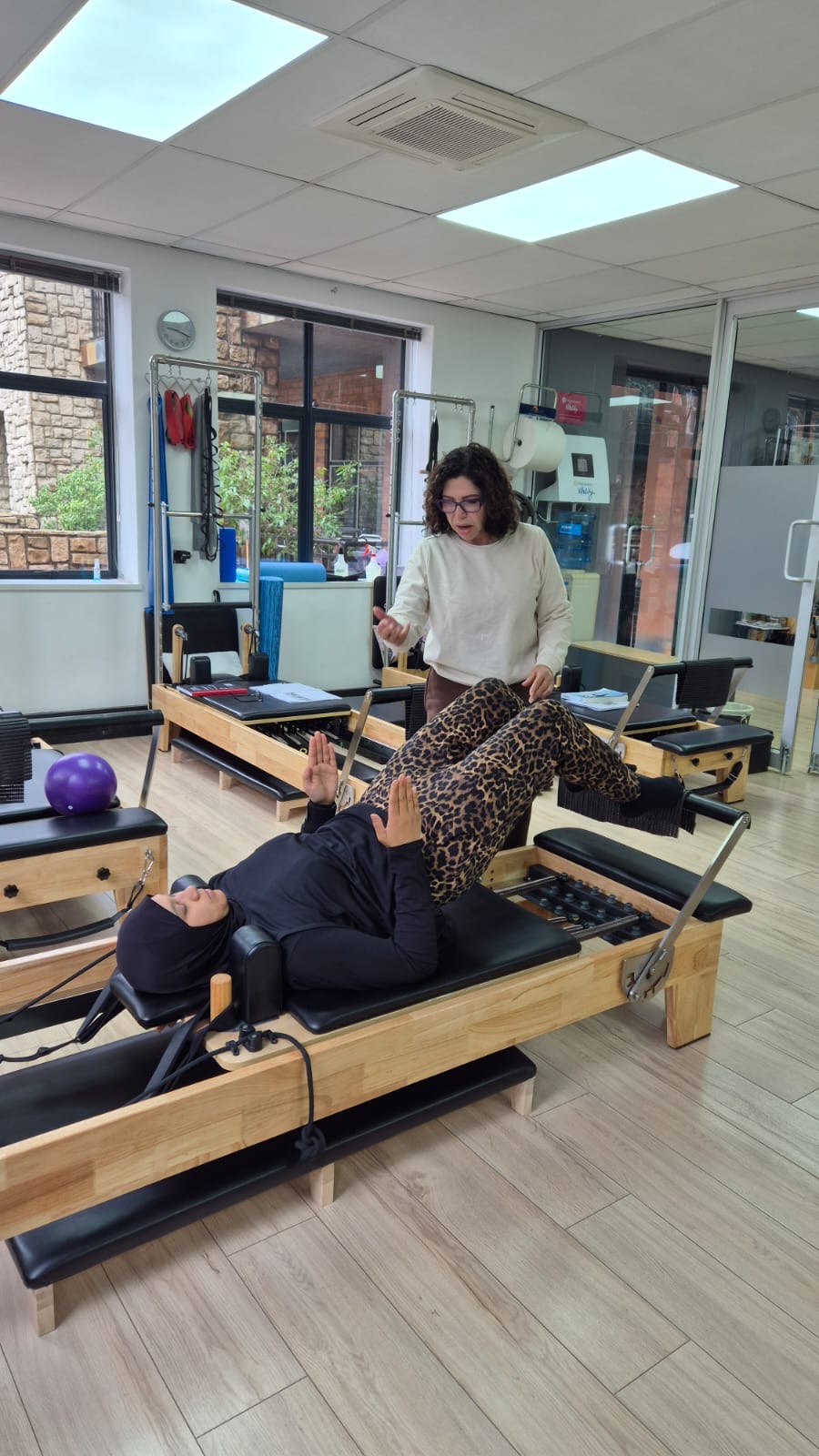
    When performing exercises with the legs in a tabletop position, bringing the knees slightly closer towards the chest can help encourage a gentle posterior pelvic tilt, creating a more imprinted position. This often helps clients engage their abdominal muscles more effectively while reducing strain on the lower back.

    Neutral Spine vs Imprinted Spine: Which One Is Correct?

    The answer is simple:

    Both are correct when used appropriately.

    The goal is not to force every client into the same position. Effective Pilates instruction considers:

    • Individual anatomy
    • Posture
    • Mobility restrictions
    • Existing injuries
    • Strength levels
    • Exercise objectives

    A qualified Pilates instructor will determine whether neutral spine or imprinted spine is most suitable for a particular client and exercise.
    How Pilates Dynamics Teaches Spinal Alignment

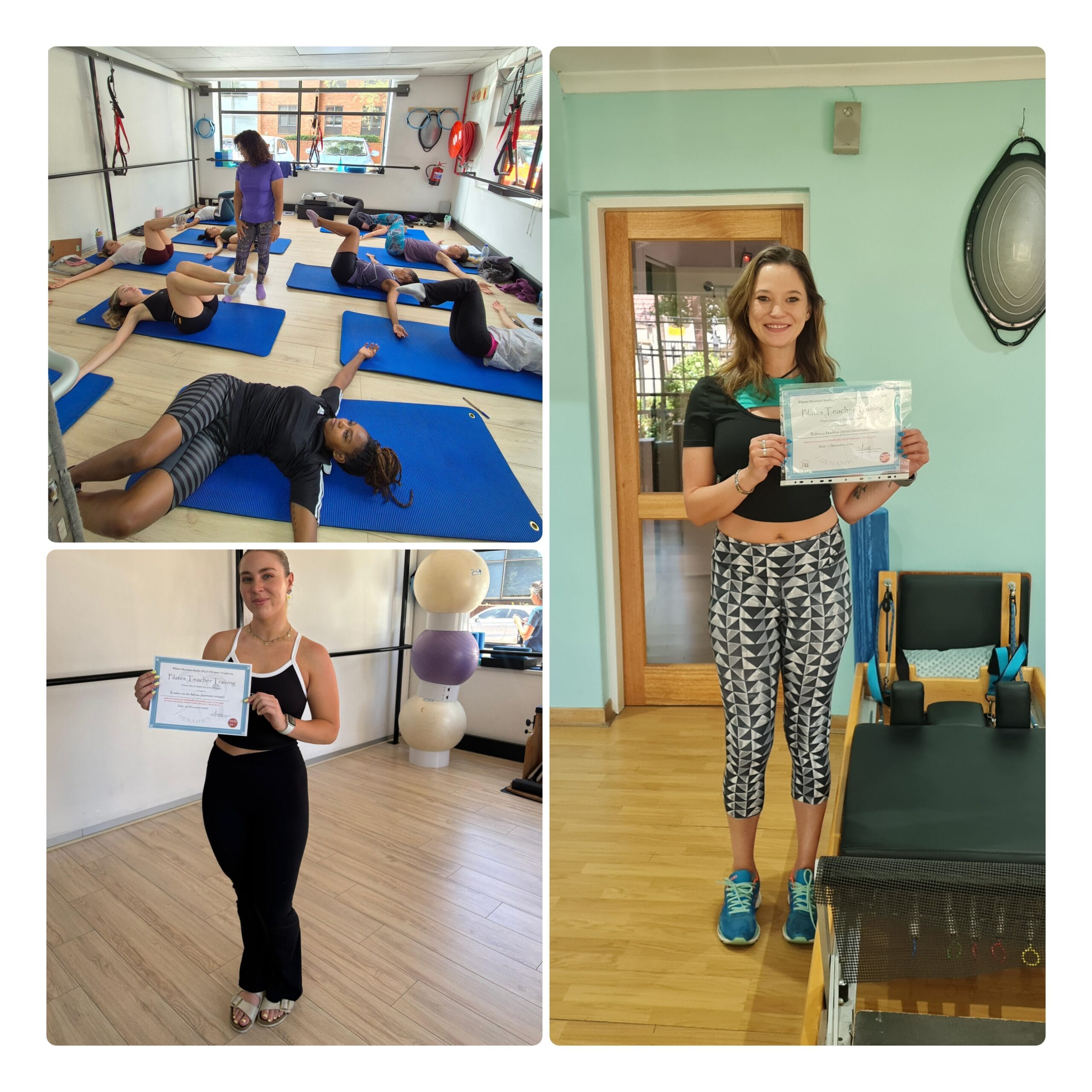
    Pilates Dynamics is a leading Pilates Teacher Training Centre and Pilates Studio in Randburg, Johannesburg, with more than 19 years of experience in Pilates education and movement training.

    Our Pilates Teacher Training Courses focus on:

    • Functional anatomy
    • Biomechanics
    • Postural assessment
    • Injury management
    • Exercise adaptations
    • Movement screening
    • Spinal alignment principles

    Students learn how to identify postural deviations and apply appropriate modifications for different body types and population groups.

    Rather than teaching a one-size-fits-all approach, Pilates Dynamics equips future instructors with the knowledge to understand how the body moves and how Pilates exercises can be adapted safely and effectively.

    Pilates Teacher Training Courses in Johannesburg

    If you are looking for comprehensive Pilates Teacher Training in Johannesburg, Pilates Dynamics offers in-depth Pilates Mat and Pilates Reformer courses designed to prepare students for the international Pilates industry.

    Our training goes beyond simply teaching Pilates repertoire. We focus on developing a deep understanding of anatomy, movement, posture, and exercise application so that graduates can confidently work with a wide variety of clients.

    Whether you are starting a new career in Pilates or expanding your professional skills, our courses provide practical, hands-on training and mentorship.

    Pilates Classes in Randburg, Johannesburg

    Pilates Dynamics offers:

    • Private Pilates classes
    • Duo Pilates sessions
    • Group Pilates classes
    • Pilates Reformer training
    • Pilates Mat classes

    Our experienced instructors are dedicated to helping clients improve posture, spinal alignment, core strength, flexibility, and overall movement quality.

    Whether you are a beginner or an experienced practitioner, our team can help you achieve your fitness and wellness goals through personalized Pilates instruction.
    Final Thoughts

    Understanding the difference between a neutral spine and an imprinted spine is one of the most important foundations of Pilates practice.

    A neutral spine promotes optimal alignment and functional movement, while an imprinted spine can provide additional support and stability during specific exercises.

    Neither position is universally right or wrong. The key is understanding when each should be used based on the individual, the exercise, and the desired outcome.

    At Pilates Dynamics, we teach clients and future instructors how to assess movement, understand posture, and apply Pilates principles safely and effectively for every body.

    Pilates Classes in Randburg

    We would love to train with you and would love for you to sign up for classes using this link:

    Pilates Classes at Pilates Dynamics Studio

    Pilates Courses in Johannesburg

    Our Pilates Teacher Training Academy is situated in Randburg. We would love for you to
    sign up for courses using this link:
    Pilates Teacher Training Courses

  • What is Pilates and What Are the Benefits of Pilates?

    What is Pilates and What Are the Benefits of Pilates?

    What is Pilates?

    Pilates (pronounced puh-lah-teez and not pie-lates or pilate) is similar to yoga but offers more specific strength and focus and emphasizes your body’s core — the abdomen, obliques, lower back, inner and outer thigh, butt, and so on. For this reason, Pilates develops much of what exercisers need — body transformation, mobility, core strength, flexibility, muscular endurance, coordination, balance, injury prevention, strength and conditioning, and good posture — with a much lower chance of injury than with other forms of exercise. The discipline emphasizes correct form (including burn and shaking) instead of only going for the burn. Because much of the focus is on good posture and body mechanics during exercise, you can stand and sit taller, feel less pain, reduce injuries and walk more gracefully.

    Will i get bored?

    Pilates – or as some people say – Pilate – exercises require you to engage virtually your whole body. At times, you may try to strengthen one muscle while stretching another. The moves take lots of concentration; you can’t simply go through the motions like you can on gym equipment. And then, for every move you think you’ve mastered, Pilates has another version that’s a little different and a little harder.  You will always be challenged with more advanced exercises as you become stronger and more flexible.  With so many exercise variations and progressions, and a myriad of different Pilates Mat and Small Equipment and Pilates Large Machines like the Pilates Cadillac, Pilates Tower, Pilates Reformer, Pilates Chairs, and Pilates Barrels, you may have a hard time getting bored with Pilates.

    How is a typical Pilates Class structured?

    Pilates classes start out with a warm-up, followed by working the legs and glutes, hips, abdominals, arms, side work, balance, full body, back muscles, and stretching.  Mobility is incorporated into the aforesaid workout.  As you can see, Pilates is a full body workout.  If you live in the Randburg area, or you work in the Randburg area, you can search for Pilates Near Me to find us.

    How does Pilates contribute to Core Strength?

    Pilates focuses on slow, controlled movements to activate deep abdominal muscles, including the transverse abdominis, pelvic floor, and obliques, enhancing spinal stability and posture. Key exercises like the Hundred, planks, bridges, and dead bugs, often performed on a mat or a Pilates Reformer, build muscle.

    Can Pilates transform the body?

    Pilates transforms the body by building long, lean muscle, improving posture, and strengthening the deep core through consistent, controlled movements. Practicing Pilates 2–3 times a week enhances muscle definition, flexibility, and body awareness, often leading to a more toned, sculpted physique and improved confidence.  If you dream of a flat stomach and a longer, leaner body with great posture, look no further!

    Does Pilates provide flexibility and mobility?

    Absolutely, one of the many benefits of Pilates is flexibility and mobility.

    Pilates enhances flexibility and mobility through controlled, low-impact movements that elongate muscles, strengthen the core, and increase joint range of motion. Pilates includes exercises that provides spinal articulation like the Roll Up and Spine Stretch Forward, hip opening exercises like Lunges and other hip stretches and hip circles, and thoracic rotational exercises like Thread the Needle, and the Cat Cow exercise – to name but a few – to focus on muscular elasticity and to improve functional movement.

    Does Pilates contribute to Injury prevention?

    Pilates prevents injuries by strengthening the deep core, correcting muscle imbalances, and improving mobility, which creates a stable, efficient body. It supports alignment and increases proprioception, reducing strain on the spine, knees, and shoulders. Key for athletes and daily life, it focuses on controlled, low-impact movements.

    Pilates for Full-Body Conditioning:

    Pilates exercise target multiple muscle groups at once, similar to compound movements in lifting, which improves muscle tone, endurance and flexibility simultaneously.  it is an ideal method for building a resilient, high-functioning body.  Pilates is great for athletes like golf, cricket, tennis, runners, cyclists, HYROX, Weightlifting and CrossFit trainers.  Pilates is highly adaptable and can be modified for people with injuries and pathologies, or beginners and the elderly.

    What is Reformer Pilates?

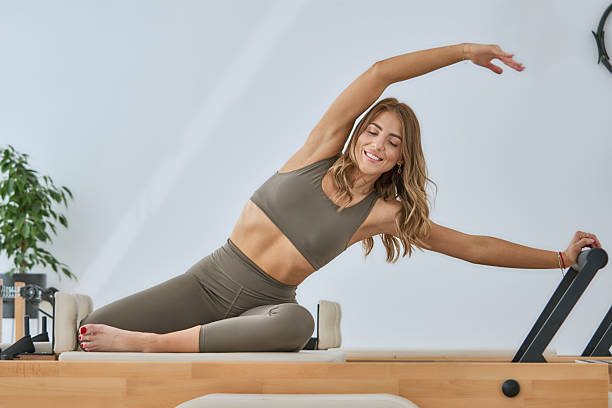
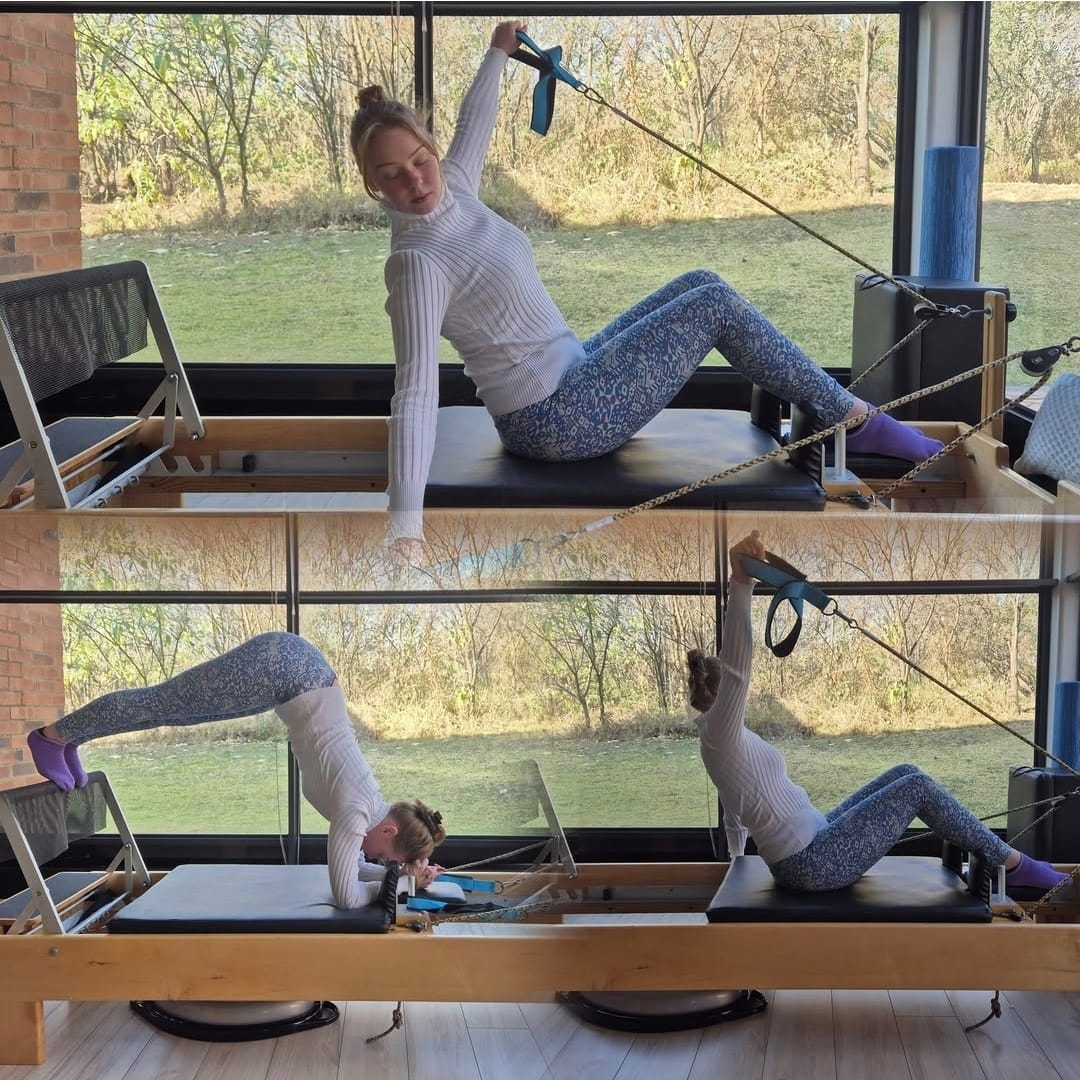
    Reformer Pilates is a low-impact, high-intensity workout performed on a specialized, spring-based sliding carriage machine. It enhances core strength, flexibility, and muscle tone by utilizing resistance from springs and pulleys, allowing exercises in lying, sitting, or standing positions.  The spring tension can be adjusted to provide assistance or resistance and is ideal for beginners through to athletes.  The Reformer comes with a Jump Board, which is a vertical attachment and provides a cardio workout, which aids in weight loss, bone density and full body strengthening.

    Pilates in Johannesburg:

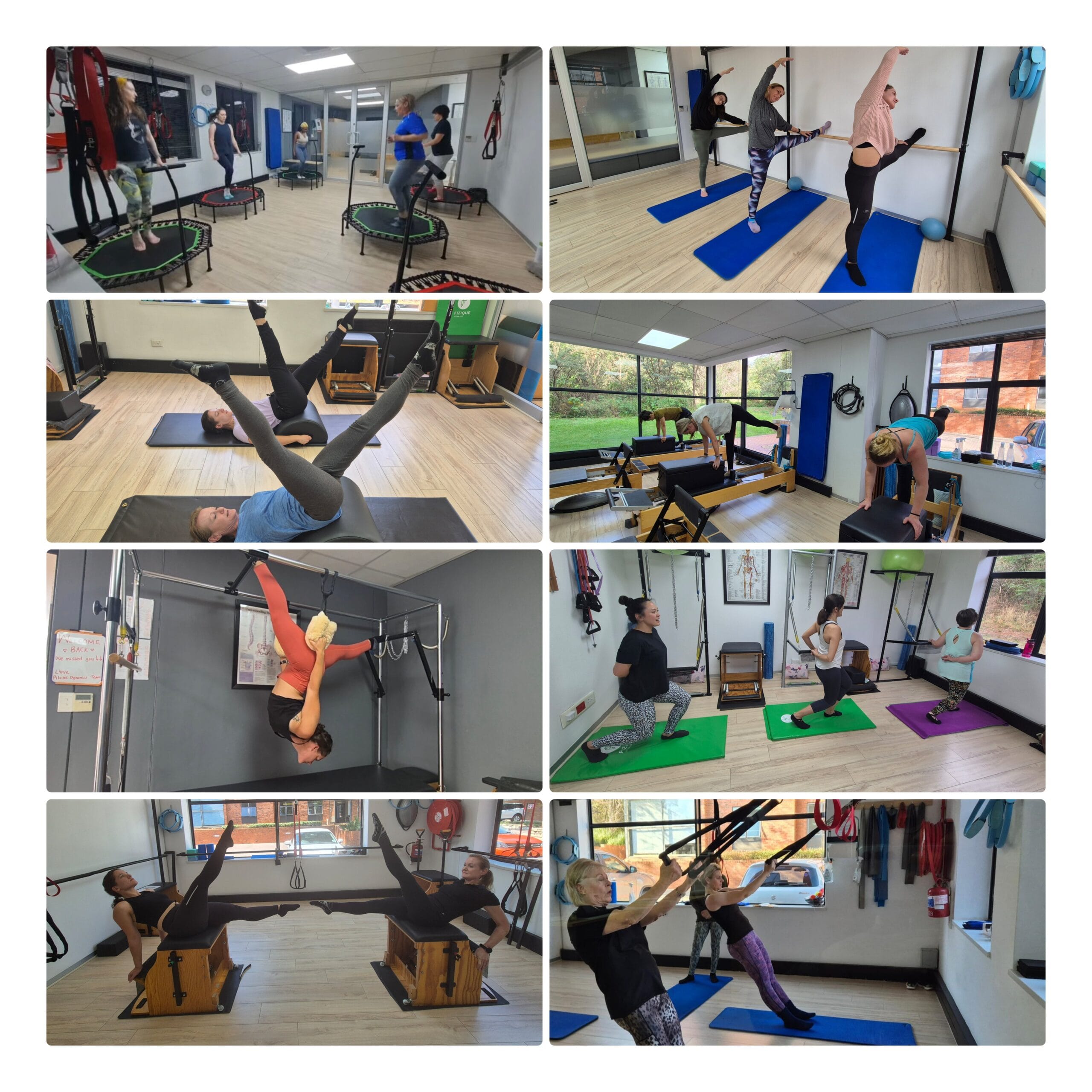
    There are several studios in Johannesburg.  Pilates Dynamics is situated in Darrenwood which is located between Northcliff, Cresta and Linden in Randburg, Johannesburg. Pilates Dynamics offers state-of-the-art facilities and equipment at Stonemill Office Park, 300 Acacia Road, Darrenwood. Our Pilates Instructors all have in-depth experience and knowledge in addition to having formal exercise qualifications and they continuously attend workshops and courses to remain on the edge of international pilates and exercise knowledge and developments. Pilates Dynamics is also a Pilates Teacher Training facility, and their focus is therefor on continuous learning and training to provide our clients with the best care and expertise. We provide you with fresh training programs and materials so that you never do the same program. Our group classes are small (a maximum of 8 people in a group). We incorporate many props and equipment into our group classes.   In addition to group training, we also offer Private and Semi-Private training for PILATES and STRETCH CLASSES to Adults and Children. Our Large Machine classes incorporate the famous REFORMER; CADILLAC; TOWERS; WUNDA CHAIRS; and LADDER BARRELS, together with a variety of all the smaller equipment.

    Is Pilates Dynamics running any specials currently?

    Yes! We are offering a first private assessment/orientation class, which is a one-on-one pilates session with a Pilates Instructor for only R160.  This is a 50% discount on the normal price of R320.  Come and avail yourself of this incredible special and fall in love with Pilates.  You will never look back.

    How do I sign up for this First Pilates Private class or for Group Pilates Classes?

    Contact Pilates Dynamics on 011-792 5459 or Whatsapp Pilates Dynamics on 0729992229 or email us on info@pilatesdynamics.co.za to sign up for any of our classes.

  • Transform Your Body in 2026 with Reformer Pilates

    Transform Your Body in 2026 with Reformer Pilates

    Why Reformer Pilates Works So Well

    If you’ve been curious about Reformer Pilates but aren’t quite sure what makes it so wonderful, you’re not alone. A lot of people make the mistake of thinking it is going to be easy, but after their first class, muscles are hurting in places that they didn’t know they had muscles. This is a good thing!
    So, let me break it down for you.

    What Is Reformer Pilates Really?

    Pilates often incorporates spring-based resistance machines known as reformers, they can look intimidating at first, but once you are on it, you will love it. The springs add resistance, the carriage moves with you, which means your body is working in a much smarter way.
    The key thing to know?
    Reformer Pilates isn’t about rushing or pushing through pain. It’s about balance, control and alignment and that is why it works so well.

    Why It’s So Effective

    Here is where people notice the fastest changes
    You get stronger.
    And I’m not only talking about the surface muscles, I mean the deep and main muscles that supports the most important parts of the body, like your spine, your hips and your posture and guess what? Your core is always working, even though it doesn’t feel intense.

    Your posture improves without you trying.
    When your body gets stronger and more balanced with time, you will naturally start sitting, standing and moving better. No more slouching = Less Tension!

    You feel more flexible and more stable.
    Pilates strengthens muscles while they lengthen them, so instead of feeling tight or stiff, you start feeling more open and supported.

    You feel more flexible and more stable.
    Pilates strengthens muscles while they lengthen them, so instead of feeling tight or stiff, you start feeling more open and supported. It’s low impact, but don’t underestimate it, because the Reformer supports your body, it’s gentle on your joints which makes it great for anyone, including beginners.

    Is Reformer Pilates Only for “Fit” People

    No definitely not, Reformer Pilates is one of the most adaptable forms of exercise. The spring strength on the reformer can change between lighter or heavier. Your movements can be modified, and progressions are only added when you are ready.
    It works for:
    • Beginners
    • Desk workers with sore backs, necks etc.
    • Athletes wanting to perform better
    • People that have injuries that needs rehabbing
    • Any person who would like to improve better movement in their daily lives

    At Pilates Dynamics, small group classes mean instructor’s attention is not on too many
    people at once and they can concentrate on each individual in the class.

    How Often Should You Do Pilates?

    In all honesty consistency is key.
    Two to three sessions a week is ideal, but even twice a week can bring noticeable changes if you stick with it. Reformer and Mat classes can be mixed and that is a great way to stay balanced. You don’t have to worry if the progress feels slow at first, Pilates works in the background.
    After a few sessions, you will start to realise that nothing hurts anymore, and your posture has improved immensely.

    Is Pilates Worth Trying?
    If you want a workout that makes you stronger, improves your movement, and really supports your body long-term, it is absolutely worth it. And if you are not sure where to start, that’s also okay.

    The hardest part is usually just showing up for the first class.

    To book that first class:
    Call Pilates Dynamics Studio on: 011-792 5459 or send us a WhatsApp message on 072 999 2229 or email us on: info@pilatesdynamics.co.za or visit our studio at Stonemill Office Park, 300 Acacia Road, Randburg

  • Various Types of Pilates Classes for Anti-Ageing

    Various Types of Pilates Classes for Anti-Ageing

    Is Pilates the new antidote for anti-ageing?

    Yes, yes, and yes. Everyone is always talking and considering new ways and means to fight the ageing process.  You cannot read a magazine or watch a TV program, without seeing something about delaying the ageing process.  Not only does almost everyone engage in a Botox and Filler regime, but we are also constantly researching and investing in weight-loss and health supplements as well as the best skincare products that we can afford.  However, does anyone realize that Pilates also fights the ageing process and costs much less than any of the beauty regimes referred to here?

    What makes a person look old?

    Our first thoughts are about wrinkles, sagging skin or grey hair, but does anyone think about posture?  Poor posture can make you look much older than you actually are!  Not only does it affect your looks, but it also affects the way in which your body functions and creates pain and discomfort.  Picture 2 people of the same age – let us say they are both 75 years old – standing next to each other. The one person stands tall and upright and the other person is stooped forward.  The person who is stooped forward will look at least 10 years older that the tall upright person next to him or her of even age. Not even to mention that the person with the poor and stooped posture will struggle to move, whilst the person with the good posture will be able to move with ease and grace.

    Why is Pilates such a great antidote to ageing then?

    Pilates is one of the best anti-ageing exercise programs because it addresses such a big variety and many aspects of fitness.

    The Pilates exercise regime focusses on the whole body and covers muscle strength, flexibility training, postural exercises, balance, and mobility training.  It is the best 360-degree all-round training method out there.

    Can everyone do Pilates?

    Most people can engage in a Pilates training program, however we do suggest that you book an initial Pilates class so that your instructor can get to know your body and ensure that you are fully prepared to attend a Pilates GROUP class, if that is your goal.

    If you have any injuries or any contra-indications to certain movements, then you should engage in private Pilates classes.  Private Pilates classes are focused on your body and your goals, whether that may be to improve your strength and flexibility, or whether you wish to regain functionality after injury, or perhaps for better sports performance, or perhaps just to move without pain and with ease and grace.

    What types of Pilates Classes do Pilates Dynamics Offer?

    1. Pilates Reformer STRECTCH classes:

    Pilates Stretch classes are specialized instructor-led classes designed to increase range of movement, improve joint mobility, and increase flexibility through targeted full-body stretching techniques.

    Quite often if stiffness and tightness is present in some muscles groups, the opposing muscles are unable to work at their maximum capacity due to the restriction of these short and tight muscle groups.  These muscles need to be stretched and lengthened first to maximise the work and function of the other muscle groups.

    Short muscles around joints can lead to injury, so it is important to work on lengthening the muscles and strengthening them to bring about balance, i.e., strength vs flexibility.

    Benefits and key aspects of Stretch:

    • Goal:To enhance flexibility, improve posture, reduce muscular tension, and promote relaxation.
    • Techniques:Sessions typically include holding static stretches (15–60 seconds), dynamic movement-based stretches, myofascial release, and breathwork.
    • Structure:Often begins with a gentle warm-up to increase blood flow, followed by targeted stretches for various muscle groups, and a cooldown.
    • Benefits:Helps relieve backaches, decreases injury risk, improves athletic performance, and helps with relaxation.
    • Variety:Classes can range from restorative, yoga-inspired sessions to more intense flexibility training, sometimes incorporating foam rollers.
    1. Pilates REFORMER classes:

    Reformer Pilates is a low-impact, full-body workout focusing on core strength, flexibility, balance and co-ordination.  It involves precise movements using the Reformer and breathing techniques to enhance physical and mental wellness and awareness.

    The Reformer works with springs, which provides adjustable resistance. It also has a movable (sliding) carriage, to aid motion.  This method offers a broader range of exercises targeting specific muscle groups more effectively.

    Resistance is adjustable, which makes this an excellent option for beginners and athletes.

    Benefits:

    • Improved Core strength and all over body strength as well as stability
    • Improved flexibility and range of movement
    • Full Body workout
    • Low impact and high efficiency
    • Personalized experience for private (one-on-one) clients
    • Small group classes with a focus on individuality
    • Injury preventative
    • Improves posture
    • Improves agility with age and joint longevity
    • An excellent cross-training method
    1. Pilates MAT classes:

    Pilates MAT classes is a low impact, full body workout, providing strength, improved flexibility, and enhanced posture using various small equipment for resistance like: Bands, Poles, Balls of various sizes, Bosus, Sliders, Fee Weights, Pilates Rings, Balance Pads, Balance Discs, Aerobic Steppers, Arc Barrels, etc..

    The truth is that many people underestimate Mat Pilates.  They think it is too gentle to make a difference or that it is only for beginners.  This is a misconception and prevents them from experiencing the real, science-backed Mat Pilates benefits that transforms strength, posture, tone and overall well-being in just a few weeks.

    Benefits:

    • Core Strength & Stability
    • Improved Posture and Alignment
    • Enhanced Flexibility
    • Low Impact on Joints
    • Mental Well-being
    • Full Body Toning

    How can I book a Pilates class?

    You can call us on: 072 999 2229 or email: info@pilatesdynamics.co.za to book your class.  We are a fully equipped studio with all the Pilates Machines and Equipment imaginable and our private studio is set in a tropical garden environment, which makes for an exercise haven.

    We offer PRIVATE and GROUP class training.

    Are you a Discovery Vitality member?  If you are, you will earn vitality points for every workout done at Pilates Dynamics.

     **Consider Pilates the new Botox.  Stay young and stay healthy.  Give it a try and do something that you will thank yourself for tomorrow!**

  • Pilates for Beginners: Everything You Need to Know Before Your First Class

    Pilates for Beginners: Everything You Need to Know Before Your First Class

    A Pilates Beginner ?

    If you’re new to Pilates and not sure where to start, you’re in the right place. At Pilates Dynamics, we believe Pilates is for everyone — no matter your age, fitness level, or experience. Our beginner Pilates classes in Gauteng are designed to help you move better, feel stronger, and connect with your body in a whole new way.

    ⸻

    What Is Pilates?

    Pilates is a low-impact exercise method that focuses on strengthening your core, improving posture, increasing flexibility, and is a full body workout. 

    Through precise, controlled movements and mindful breathing, Pilates teaches you how to move with awareness — building strength from the inside out.

    At Pilates Dynamics, we offer both Mat Pilates (using your body weight and small props) and Reformer Pilates (using equipment with resistance to deepen your workout).

    ⸻

    The Benefits of Pilates for Beginners

    If you’re just getting started, Pilates is one of the safest and most effective ways to build a strong foundation for your fitness journey. Here’s what you can expect:

    • Improved core strength – Strengthen the muscles that support your spine and posture, including upper and lower body. 

    • Better flexibility and mobility – Move more freely and reduce stiffness.

    • Improved posture – Say goodbye to slouching and back pain from sitting all day.

    • Gentle on joints – Perfect for beginners, seniors, or anyone recovering from an injury.

    • Reduced stress – Focused breathing and mindful movement help calm the mind.

    Pilates isn’t just a workout — it’s a way to reconnect with your body and build lasting strength.

    ⸻

     What to Expect in Your First Pilates Class

    Feeling nervous before your first class? Don’t be! Here’s what a beginner Pilates class at Pilates Dynamics is like:

    1. A warm welcome – Our friendly instructors will introduce you to the space and equipment.

    2. Gentle warm-up – We’ll guide you through breathing and alignment basics while building up on pace and intensity to provide strength, mobility and flexibility. 

    3. Step-by-step instruction – Every exercise is explained clearly and adjusted to your ability.

    4. Supportive environment – We keep our classes small, so you get personal attention.

    You’ll leave feeling taller, lighter, and more in tune with your body, feeling that your muscles have worked. 

    ⸻

    What to Bring to Your First Pilates Class

    You don’t need fancy gear to start Pilates — just:

    • Comfortable, fitted clothing that allows you to move freely

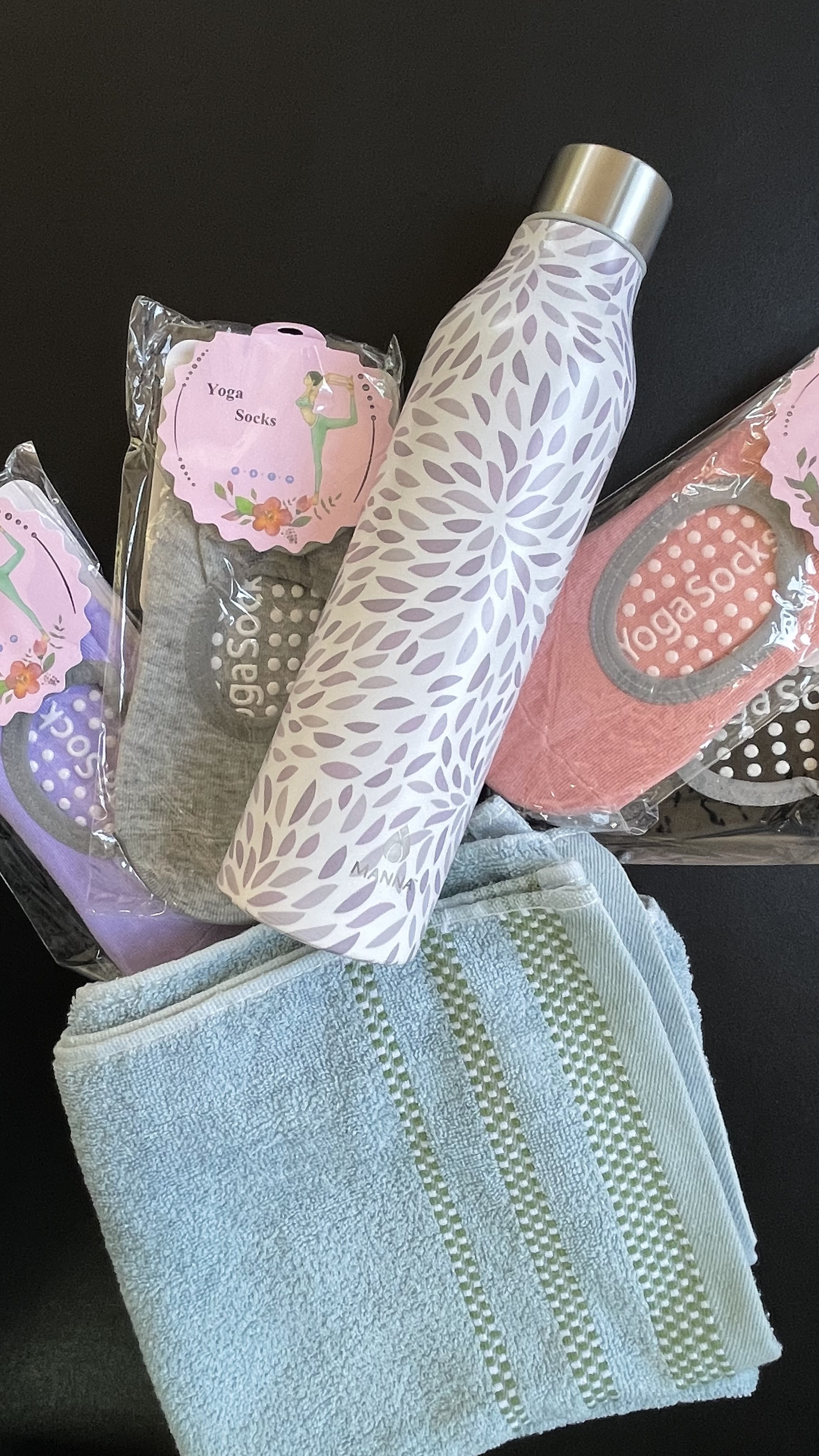
    • Grip socks (optional, but helpful for reformer classes)

    • A water bottle & small towel

    • A positive attitude!

    ⸻

    How Often Should Beginners Do Pilates?

    For beginners, we recommend 2 to 3 classes per week.

    Consistency is key — within a few weeks, you’ll notice stronger muscles, improved balance, more muscle tone and more energy in your daily life. 

    Once your body strength has improved we will move you to either an intermediate or athletic Pilates class.  

    ⸻

    Start Your Pilates Journey at Pilates Dynamics

    If you’ve been searching for “Pilates classes near me” or “beginner Pilates in Gauteng”, look no further.

    At Pilates Dynamics in Randburg, we offer:

    • Beginner Mat Pilates classes

    • Reformer Pilates for beginners

    • Private one-on-one sessions for extra support

    Our instructors are here to help you move safely, confidently, and joyfully.

    Book your first beginner class today and discover why Pilates is one of the best ways to build a stronger, more balanced body and healthier you. 

  • Why is Reformer Pilates So Popular?

    Why is Reformer Pilates So Popular?

    Reformer Pilates is popular because it provides a versatile, low-impact, full-body workout
    that builds strength, flexibility, and core stability while being adaptable for all fitness levels
    and ages. The use of the Pilates Reformer machine’s adjustable springs allows for tailored
    resistance, promoting functional movement and a strong mind-body connection for
    enhanced physical and mental well-being, making it a safe and effective choice for both
    fitness and rehabilitation.

    What are the benefits of the Pilates Reformer?

    The Pilates Reformer is very versatile:
    The reformer uses springs and pulleys to provide adjustable resistance and has a movable
    carriage on which you can lying down, seated, and standing and it allows for a vast range of
    exercises and modifications.

    Low-Impact, High-Effectiveness:
    As indicated above, exercises can be done lying down and seated which makes it ideal for
    injury rehabilitation and prevention, with no stress on the joints.

    Full-Body Workout:
    During your Pilates Reformer workout, you will engage multiple muscle groups
    simultaneously, focusing on strengthening the deep core muscles, improving overall stability,
    and creating a balanced physique. This is the beauty of the Pilates Reformer in that you
    work several groups of muscles simultaneously!

    Enhancement of flexibility, mobility and strength:
    Resistance and controlled movements help to increase both muscular strength, mobility and
    flexibility, leading to a resilient, toned and agile body.

    The Pilates Reformer is adaptable for All Levels:
    The adjustable resistance and exercise variations make it suitable for beginners, athletes,
    dancers, and people undergoing rehabilitation.

    Functional Movements:
    The focus is on functional movement patterns which improves body control and body
    awareness and this promotes better posture, performance, balance and resilience in daily
    activities.

    Accessibility:
    The Pilates Reformer is suitable for a wide range of individuals, from young adults to the
    elderly, supporting various fitness goals and helping to combat the effect of sedentary
    lifestyles.

    Are there any downsides to the Pilates Reformer?
    Pilates, if not done properly, can exacerbate existing injuries, especially if members find
    themselves in a group class for which they are not yet ready. It is important to do an
    orientation class (a private class) to begin with so that you Pilates Instructor can assess
    whether you are ready to join a group and also which group to join, depending on your ability
    and fitness level.
    Many people do not realize that some Reformer Pilates exercises require careful attention to
    form and posture to avoid strain on joints and muscles.

    What is so great about Reformer Pilates?
    The reformer machine can be adjusted to target various muscle groups by altering
    resistance levels and angles of movement, thereby effectively working the arms, legs, back
    and core.

    Why is Pilates so big right now?
    Compared to other forms of exercise, Pilates is a low impact but highly effective workout,
    making it accessible to people of all ages and fitness levels.

    Is Reformer Pilates worth the cost?
    The Pilates Reformer is an intricate and expensive piece of equipment made up of various
    parts that are movable and immovable and works with adjustable spring tension for general
    fitness, sports performance and rehabilitation. The cost of Pilates Reformers is high, and
    maintenance is of absolute necessity. In terms of the versatility of the Pilates Reformer and
    being able to use and exercise multiple muscle groups with an instructor that ensure proper
    form, makes the Pilates Reformer a very popular choice and demand is high.

    BEST PILATES COURSES IN JOHANNESBURG & CAPETOWN

    Should I upskill to become a Reformer Pilates Instructor?
    Most definitely!! With the increase in demand of Reformer Pilates, instructors with a Pilates
    Reformer qualification is in great demand. Most studios only offer Pilates on Large Pilates
    Equipment like the Pilates Reformer, Pilates Tower, and Pilates Wunda Chair. If you are a
    Pilates Instructor only qualified in Pilates Mat, it is important to upskill and to stay ahead of
    trends.

    Who can I contact to sign up for a good Pilates Reformer Course?
    Contact Pilates Dynamics Studio (Pty) Ltd and Pilates Dynamics Academy (Pty) Ltd for a
    Reformer course or for their Pilates Comprehensive Courses, which includes the Pilates
    Mat; Pilates Reformer; Pilates Cadillac/Pilates Tower; Pilates Wunda Chair; and Pilates
    Ladder Barrel and Arc Barrels. Pilates Dynamics is a leader in quality, comprehensive and
    accredited courses, inclusive of Anatomy.

    The contact details are: info@pilatesdynamics.co.za or www.pilatesdynamics.co.za or call
    011-7925459 or 072 999 2229 for more information.

  • What is Pilates? Answers to Frequently Asked Questions

    What is Pilates? Answers to Frequently Asked Questions

    What is Pilates and how is it different from Yoga?
    Pilates and Yoga, while both low-impact exercises, differ in their primary focus, techniques, and origin. Pilates emphasizes core strength, postural correction, muscle toning, balance, and controlled movements for body control, body awareness and flexibility, while yoga focuses on flexibility, balance, and mindfulness, often with spiritual and mental benefits. Every Pilates Class is a full-body workout. Pilates is also a method often used by Bio kineticists and Physiotherapists for rehabilitation.

    Here is more detailed information;

    Pilates:
    • Focus: Core strength, muscle toning, body control, flexibility, mobility, balance.
    • Technique: Involves controlled movements, often using equipment like reformers, to strengthen and stabilize the core while engaging other muscle groups.
    • Origins: Developed by Joseph Pilates in the 20th century, focusing on physical fitness and rehabilitation.
    • Breathing: emphasizes deep, lateral breathing. The breathing pattern is paired with muscle function to work deeper into the muscles.
    • Equipment: Ballet Barre; TRX; Big Balls; Thera-bands; Magic Ring; Blocks; Straps; Rebounders; Pilates Reformers; Pilates Towers; Pilates Wunda Chair; Pilates Ladder and Arc Barrels.

    Yoga:
    Focus: Flexibility, balance, mindfulness, and spiritual well-being.
    Technique: Involves holding poses, flowing between poses, and connecting breath with movement.
    Origin: Ancient practice with roots in India, incorporating physical, mental, and spiritual exercises.
    Breathing: Uses various breathing techniques to calm the mind and energize the body.
    Equipment: Uses less equipment than Pilates, often just a mat and sometimes props like blocks and straps.

    Do I need to be fit or flexible to start Pilates?
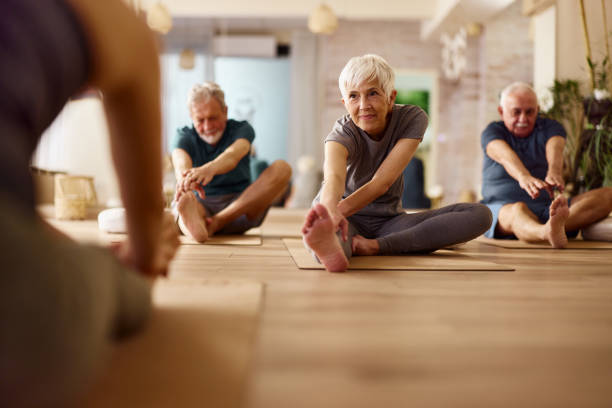
    No, the beauty of Pilates is that you can start from as young as age 5 all the way up to age 90. Pilates offers many exercise adaptations and modifications to either enhance your workout or to make it easier, depending on the body types and strength levels that we deal with. Whether you are an athlete or a dancer seeking an advanced exercise program, or someone who rarely exercises, this exercise method is for you.

    What type of classes are available in Johannesburg?
    At Pilates Dynamics you can choose to do a Pilates Mat class, which involves either a class using the Ballet Barre, or a Rebounding class (trampolines) or any other piece of equipment like the Magic Ring, Big and Small Balls, TRX, Bosu’s, Free Weights, Arc Barrels, and more.

    The other option is to do Pilates Large Equipment classes, where we use the Pilates Reformers; Pilates Towers; and Pilates Wunda Chairs as well as a host of smaller equipment mentioned in the paragraph above.

    What do I need to bring to a Pilates class?
    At Pilates Dynamics we provide you with all the equipment, mats and water. All you have to bring an empty bottle and a towel.

    Is Pilates Reformer class better than a Pilates Mat class?
    Both the Pilates Mat classes as well as the Pilates Large Equipment (Reformer classes) have their own unique way of working the body.

    Reformer Pilates:
    Offers a more challenging strength and endurance workout – especially for Athletes and Dancers – due to the resistance provided by the machine. It can also be more effective for building muscle and improving bone density and provides more support for joints, making it suitable for individuals with injuries or limited mobility. The Reformer offers a wider range of exercises and modifications.

    Mat Pilates:
    Mat Pilates is a great starting point for beginners to learn proper form and control. Mat Pilates focuses on bodyweight exercises that build core strength and improve flexibility. These classes are usually more affordable due to less costly equipment being used.

    At Pilates Dynamics a lot of our clients do 1 Pilates Reformer and 1 Pilates Mat class per week, so that they get the best of both worlds.

    How often should I do Pilates?
    How often you should do Pilates is entirely up to availability in your schedule as well as your budget. However, we suggest that you do a minimum of 2 x weekly. If you are unable to and you have other fitness regimes, then 1 x a week will be better than nothing at all.

    Can Pilates help with back pain or injuries?
    Pilates is known to assist in back, neck and shoulder pain and to prevent injuries. The top sports teams have Pilates Trainers. We also know that if you want to be the best at your sport or active hobbies and you want to prevent injuries, Pilates is your “go to”. Keeping the muscles around your joints strong and flexible and in optimal condition, is what will save you from injury, whether you are into sports, gardening, walking or just general movement in everyday life.

    How much does Pilates cost in Johannesburg?
    Class costs vary, depending on whether you want to do private classes or semi-private classes if you choose to come with a friend or family member and you prefer training with people you know rather than joining a group class. In this instance prices can range from R350 an hour to R700 an hour, depending on the Pilates Instructors’ experience and how many people are in the private or semi-private class.

    Group classes on the other hand range from R100 to R300 per person per hour, depending on what type of group class you do and the area you are in. Generally Large Equipment classes like the Pilates Reformer are more expensive than Pilates Mat group classes.

    Is Pilates safe during pregnancy?
    Pilates is ideal for pre- and post-natal ladies. Pilates classes are adjusted from the 2nd trimester onwards. It is classed as the best exercise method for pregnant ladies. During pregnancy is important to focus of the back muscles and the core to prevent shoulders from rounding forward and back-ache. We all want to be the fittest and healthiest Moms for our babies, but it is important to train in a safe environment with a focus on the body parts and muscles that are important for Mom and Baby.

    Pilates for weight loss?
    Pilates can assist in accelerating and assisting weight loss and toning, when combined with a good diet and cardiovascular exercise. You will see and feel the difference in 3 months from when you start with Pilates. The more often you do Pilates, the quicker you will see results. Our Pilates Mat and Pilates Reformer classes include cardio from time to time to get the heart rate up and burn calories.

    Can men do Pilates?
    Absolutely Men can do Pilates. It assists Athletes and Dancers to extend their range and to strengthen the muscles around their joints. Men are usually very tight in their hips, lower back and hamstrings. Pilates is focused on creating balance within each body.

    Can Pilates help to relieve stress?
    Pilates exercise helps to trigger the release of endorphins, a natural pain reliever and mood booster produced by the body. One of the principles of Pilates is “harmony”, being the “whole” meaning that you will leave a class feeling that your muscles have worked, and feeling absolutely rejuvenated.

    Few forms of conditioning can boast the profound outcomes that Pilates has – as billions of people are now experiencing.

    Is there Cardio in Pilates?
    Our Pilates Mat and Pilates Reformer classes include cardio from time to time to get the heart rate up and burn calories.

    The Pilates Reformer has a Jump Board specifically for cardiovascular and plyometric (speed and force) movements.

    Are there different styles of Pilates?
    All Pilates movements are similar, there may be some slight variations, but the principles of Pilates are all the same.

    Benefits of Pilates for women?
    1. Increases strength and posture
    2. Relieves pain and tension
    3. Improves flexibility and mobility
    4. Promotes mindfulness and body awareness
    5. Improves sleep and is a mod booster
    6. Increased lung capacity and circulation through deep breathing
    7. Rehabilitation or prevention of injuries related to muscle imbalances

    For more information contact us on 0729992229/0117925459. Email info@pilatesdynamics.co.za

  • Are Smaller Pilates Classes Better?

    Are Smaller Pilates Classes Better?

    Are smaller Pilates classes better than big Pilates classes?

    Yes, and here is why!

    The big Pilates classes are cheaper, and the dynamic is fun, and there is a lot of noise, but this is not the best for most people, especially when you are a beginner. As a beginner and even at an intermediate level you might not have learnt the principles of Pilates, or you might have done Pilates a while ago and have forgotten about the principles of Pilates, which will leave you with strained muscles, lower back and neck pain.

    Big Pilates groups with more than 10 people per Pilates Instructor, means that you will get less attention, no modifications and corrections.

    With the nature of most studios that focus on large groups, it is crammed, there is very little space, and it is very hard not to hit your neighbour.

    Pilates Instructors:
    No two bodies are the same and one of the great things about Pilates is its adaptability. From an instructor perspective it is really challenging and difficult to offer corrections and modifications to so many people, in fact it is impossible, unless you stop the flow of the class and you may then never complete a pre-prepared program and what is supposed to be a full body workout which will leave you unpopular amongst clients for stopping the momentum and flow to offer corrections to some people. It is much easier to offer corrections and adaptations/modifications in smaller classes to keep you moving safely and effectively.

    A certified Pilates Instructor would have a deep understanding of anatomy and would like to cue to the best of their ability, but with so many people in a group class, it is not possible to maintain standards.

    In addition to offering client training in smaller groups, Pilates Dynamics Studio and Pilates Dynamics Academy also has a Pilates Academy and we hand train our Pilates Instructors with absolute precision to be the best. Our instructors are there for trained to offer customized modifications that meet the needs of each client. We believe that everyone, regardless of their fitness level or physical limitations, should be able to experience the benefits of Pilates, and smaller classes make that possible.

    Client value:
    A smaller studio would value you much more and have a personal approach in terms of keeping in touch with your progress and levels of achievement and everyday communication. There is a deeper sense of community and teamwork. In smaller classes, participants often feel more connected to their instructors and fellow clients. There’s a level of camaraderie that develops when you’re working alongside a small group of people, and this sense of support can be incredibly motivating. You want to feel comfortable, supported and encouraged. The strong relationships that form in our smaller classes make Pilates more than just a workout – it becomes a shared journey toward better health and well-being.

    In a smaller class, the atmosphere is quieter, more focused, and less chaotic than in a large group setting. This makes it easier to concentrate on your body and the movements you’re performing. Pilates is all about the mind-body connection – tuning into how your body moves and improving your awareness of your posture and alignment. In a smaller class, you have the space to focus, without the distractions that can come with a larger group.

    If you can afford it, attend a studio with smaller numbers in their group classes, so that you can receive the benefit of being corrected and being offered modifications and in doing so avoid injuries. You do not want the music pumping so loud that you are not able to hear the cues of the Pilates Instructor!

    Safer and More Hygienic Environment:
    In today’s world, health and safety are top of mind for many people considering group fitness classes. Smaller Pilates classes offer a distinct advantage when it comes to maintaining a clean, safe, and hygienic environment. With fewer clients in the studio, there is more space to ensure proper distancing, and equipment is cleaned and sanitized between uses with greater attention to detail.

    Larger classes, by nature, can be more difficult to manage when it comes to maintaining cleanliness and social distancing. With fewer participants, you can feel more at ease knowing that you’re in a controlled, well-maintained space.

    Why you chose Pilates Dynamics Studio to do Pilates:
    There are countless benefits to choosing a smaller Pilates class, from personalized instruction to a stronger sense of community, faster progress, and a more focused environment. At Pilates Dynamics Studio, we believe that smaller class sizes allow for a more rewarding and effective Pilates experience, and our clients agree.

    If you’ve been considering trying Pilates, now is the perfect time to experience the benefits of a small class firsthand. We offer a “try-out” promotion for new clients at just R150 for a private class, giving you the chance to see why our intimate, supportive classes can help you achieve your fitness goals.

    Looking for something even smaller? We also offer private classes for one-on-one support from one of our trained instructors. If you find private classes a stretch in terms of your budget, why not bring a friend or a family member along to make it more affordable.

    Ready to take the next step in your Pilates journey? We can’t wait to see you in the studio!

    For more Information and bookings call: 0729992229/ 0117925459
    Email: Info@pilatesdynamics.co.za

    Home

  • What is the Hottest Exercise Trend Right Now?

    What is the Hottest Exercise Trend Right Now?

    There is no doubt that it is Pilates! Pilates is the most 360 degree type of exercise out there.

    WHAT IS PILATES?
    It involves squats, lunges, strength-training, weight-training, flexibility, cardio, and mobility exercises.

    WHAT TYPES OF PROPS AND EQUIPMENT IS USED?
    It involves using the Barre, Rebounding (Bounce), Bosus, TRX, Free Weights, Weighted Poles, Weighted Balls, Big Balls, Rings, Toning Bands, Arc Barrels, Yoga Blocks and a host of other smaller equipment that is used to challenge and/or support you.

    It also involves big machines like the Reformer, Tower, Cadillac, Wunda Chairs, and Ladder Barrels and then adding any of the smaller equipment mentioned above, to create additional challenge and/or additional support. Lets’ face it…..Reformer classes are a BIG HYPE currently , no matter which Pilates Studio or Gym you attend. The Reformer has a Jump board, which allows for cardio to be integrated into your program. Even without the Jump board, some movements involves plyometric jumps to get the heart rate up and to increase power and speed.

    WHY ARE PILATES REFORMER CLASSES SO POPULAR?
    The Reformer – and the other types of large Pilates Machines – is a brilliant way of developing a strong core and strengthening the muscles in your hips, quads, glutes, and shoulders. It is also great for building power, flexibility, balance and better posture, which all make for a more functional and efficient workout and body. The Reformer – and the other types of large Pilates machines – work with spring tension to either challenge you, or to provide more support. The Reformer’s movable base, your body weight and the neuromuscular connectivity makes it easier to connect with your body over training with traditional weights.

    As one of our clients said: “I used to do strength training, but I have swopped it for Pilates Reformer training. Honestly, it changes your workout perspective.”

    WHO CAN DO PILATES CLASSES?
    Pilates is not a fad. Professional athletes use it for cross-training purposes. Pilates is also known as a great rehabilitation type of exercise and is modified to suit all body types and/or movement restrictions. Young or old, Pilates is for everyone. Pilates is also a great workout for pregnant Moms.

    Do yourself a favour and ditch the gym for a while and do Pilates instead. You will not be sorry. And it is never too late to start Pilates. Who knows, you might like it so much that you decide to do a Pilates Course and become a Pilates Instructor.

    HOW CAN I BECOME A PILATES INSTRUCTOR?
    If you are passionate about movement and Pilates, you can enroll for one of the following courses;-
    1) Mat and Small Equipment – (this is the basic course and you can start training and earning an income upon completion)
    2) Intensive Reformer – Once you have obtained your Mat and Small Equipment course above, you can start your Reformer course. Most studios need an instructor that has done their Reformer qualification.
    3) Upon completion of your Mat and Small Equipment course, you may decide to – not only do the Reformer course – but do the Comprehensive course which involves all the Pilates machines. This covers the Reformer; Tower/Cadillac; Wunda Chair; Ladder and Arch Barrells.

    You can also enroll for a learnership program, whereby you pay 50% of the course price, and pay the balance back over a period of time, whilst you earn and learn. This is a great career opportunity. You can start training and earning from as little 3 months from starting date.

    WHAT IS THE INCOME POTENTIAL OF A PILATES INSTRUCTOR?
    Pilates Instructors can earn a starting salary of anywhere between R15 000 to R25 000 if you are still learning and depending on how many hours you want to put in. Upon qualification this figure increases dramatically.

    A Pilates Instructor also has a lot of flexibility. You can choose your income and the hours you want to work – whether you work for yourself or for a studio or a gym.

    WHERE CAN WE SIGN UP FOR PILATES CLASSES OR PILATES COURSES?
    Find a reputable private boutique studio in or around your area. Pilates Dynamics has been around for 18 years, and our Pilates Instructors are well qualified and experienced. We are client focused and our classes are small and intimate to ensure quality training.

    Our Pilates courses are in-depth and detailed to ensure that our students are well qualified and confident to teach upon successful completion of our courses. We prepare you for the international Pilates world.

    Pilates Teacher Training Courses

    Contact us on 011-7925459 or 0729992229 or email info@pilatesdynamics.co.za You can also look at our website for more information on classes or courses on www.pilatesdynamics.co.za

  • Reformer Pilates vs Mat Pilates: Which is Best for You?

    Reformer Pilates vs Mat Pilates: Which is Best for You?

    Pilates is a system of exercise and body conditioning developed in the early 20th century by Joseph Pilates, focusing on controlled movements, breathing, and core engagement to improve strength, flexibility, balance, and body awareness.

    Today we would like to focus on Mat Pilates and Reformer Pilates as the biggest debate seems to be “Which one is better?”Reformer and Mat Pilates both offer different benefits, and the “best” choice depends on your fitness goals, experience level, and personal preferences. Reformer Pilates provides added resistance and support because of the spring tension, while Mat Pilates focuses on bodyweight exercises and core strength.

    Here’s a more detailed comparison:

    Reformer Pilates:

    Reformer Pilates is a low-impact, mind-body workout that uses a specialized piece of equipment, the Pilates Reformer, to enhance strength, flexibility, and posture, targeting specific muscle groups with controlled movements and adjustable resistance. 

    • Benefits:
      • Increased Resistance:The Reformer machine allows for added resistance through springs and pulleys, leading to a more challenging and effective workout.
      • Support and Stability:The machine provides a stable platform and can offer support for individuals with limited range of movement or injuries.
      • Variety and Modifications:The Reformer offers a wide range of exercises and modifications, making it suitable for various fitness levels and goals.
      • Bone and Joint Health:The resistance provided by the Reformer can offer benefits for bone and joint health.
      • Rehabilitation:Reformer Pilates can be particularly beneficial for rehabilitation and addressing muscle imbalances.

    *NB*: While the Reformer can provide support, it’s important to have proper instruction and modifications to avoid injury and that is why you should train with a Pilates Instructor with a suitable qualification.

    It would be such a pity to put yourself at the risk of someone who could injure you!

    Mat Pilates:

    Mat Pilates is a strengthening and lengthening form of exercise that focuses on your core (trunk) muscles while also training your arms and legs. Mat Pilates is based on the original exercises that Joseph Pilates developed to strengthen his own body as a young man.

    • Benefits:
      • Bodyweight Focus:Mat Pilates emphasizes using your own body weight, promoting core strength and body awareness.
      • Low-Impact:Mat Pilates is generally lower-impact than Reformer Pilates, making it suitable for beginners and those with injuries.
      • Accessibility:Mat Pilates can be done anywhere with minimal equipment, making it convenient and affordable.
      • Improved Core Strength and Flexibility:Mat Pilates can help improve core strength, flexibility, and posture.

    While Mat Pilates provides good benefits, sometimes the range of exercises and modifications may be more limited compared to Reformer Pilates.

    Ultimately, the best choice depends on your individual needs and preferences. At Pilates Dynamics, we encourage our clients to do both types of Pilates as the benefits to both complement each other best.

    Earlier in this blog, we mentioned the importance of making sure that your Instructor has suitable qualifications.Pilates is an exercise discipline that is based on anatomical and movement knowledge together with understanding in order to strengthen, mobilize and stretch the body to create balance in the body by not overtraining or undertraining muscles- and most importantly to do so in a safe manner.

    Pilates Dynamics offers Pilates Courses in Johannesburg and from June 2025, we will be offering Pilates Courses in Cape town. Our Pilates Courses give you the confidence to teach anywhere in the world!!!

    If you are interested in becoming a top tier Pilates Instructor or if you are interested in furthering your Pilates career with confidence to teach anywhere in the world, please join us for our well sought after Pilates Courses. We get fully booked quickly so contact us on 0729992229/0117925459 or email us on info@pilatesdynamics.co.za

    1. PILATES COURSES AVAILABLE IN JOHANNESBURG: https://pilatesdynamics.co.za/pilates-teacher-training-courses/
    2. Pilates Mat & Small Equipment Course
    3. Pilates Mat & Intensive Reformer Combination Course
    4. Pilates Comprehensive Course
    5. Pilates Conversion Course
    6. Pilates Intensive Reformer Course
    1. PILATES COURSES AVAILABLE IN CAPETOWN:

    https://pilatesdynamics.co.za/pilates-teacher-training-courses/

    1. Pilates Mat & Small Equipment Course
    2. Pilates Mat & Intensive Reformer Combination Course
    3. Pilates Intensive Reformer Course