Tag: PILATES NEAR ME

  • Neutral Spine vs Imprinted Spine in Pilates: When Does It Matter?

    Neutral Spine vs Imprinted Spine in Pilates: When Does It Matter?

    Neutral Spine vs Imprinted Spine in Pilates is a question any new clients who attend their first Pilates Orientation and Assessment at Pilates Dynamics asks.

    Should I keep my spine neutral, or should I imprint my lower back into the mat?

    The confusion is understandable because many people naturally move into an imprinted spine position during Pilates exercises, regardless of whether it is appropriate for the movement being performed.

    Understanding the difference between a neutral spine and an imprinted spine is essential for improving core strength, protecting the lower back, and performing Pilates exercises correctly.

    In this article, we explain the difference between neutral spine and imprinted spine in Pilates, when each position should be used, and how Pilates instructors teach proper spinal alignment.

    What Is a Neutral Spine in Pilates?

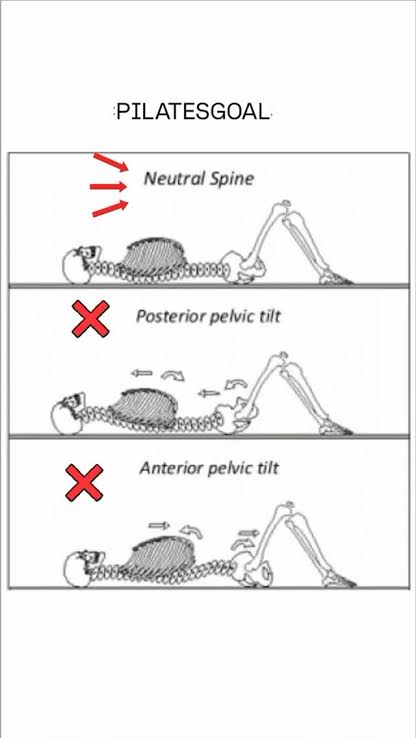
    A neutral spine is the natural alignment of the spine where the pelvis, ribcage, and spine are positioned optimally for stability and movement.

    To find a neutral spine while lying on your back:

    1. Place the heels of your hands on the front hip bones (ASIS).
    2. Position your middle fingers on the pubic bone.
    3. Create a triangle with your hands.
    4. Ensure that the front hip bones and pubic bone are level and aligned horizontally.
    5. Keep the ribcage relaxed so the lower ribs do not lift towards the ceiling.

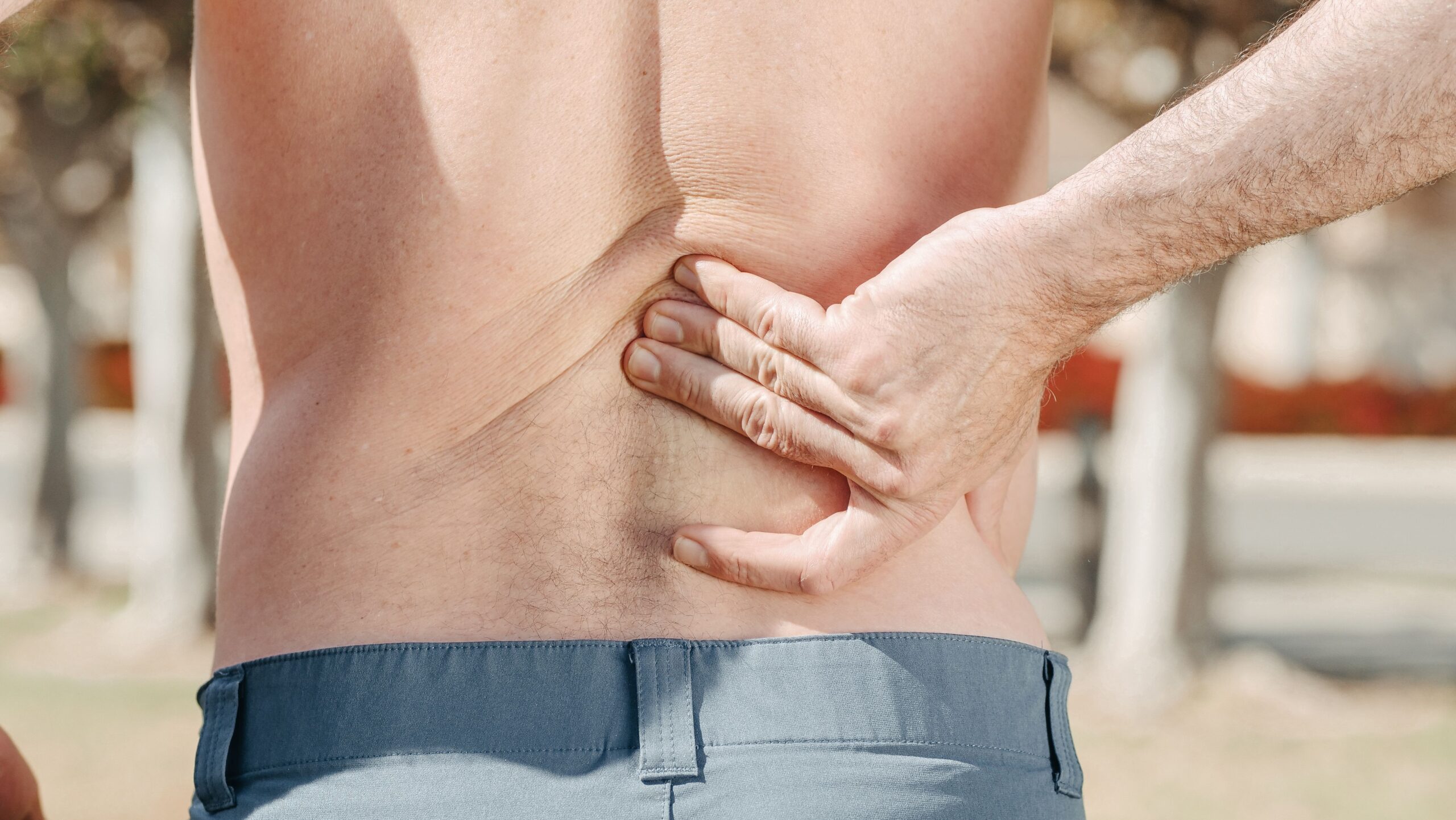
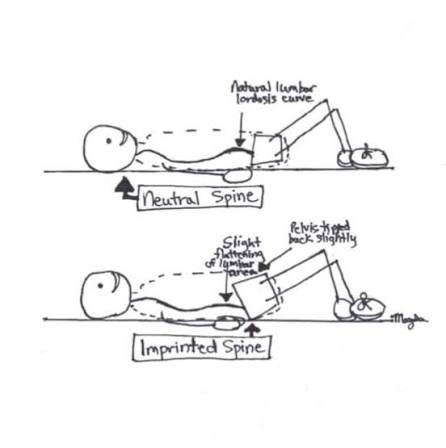
    In a neutral spine position, there may be a small natural space between the lower back and the mat. The size of this gap varies from person to person depending on their spinal curvature, anatomy, and soft tissue distribution.

    A neutral spine does not mean forcing the lower back flat into the mat. Instead, it means maintaining the spine’s natural curves while keeping the pelvis and ribcage aligned.
    Why Is Neutral Spine Important in Pilates?

    Maintaining a neutral spine during Pilates exercises helps create optimal spinal and pelvic stability.

    When the body is properly aligned:

    • The deep core muscles function more effectively.
    • The muscles surrounding the hips and spine work efficiently.
    • Unnecessary shearing or pulling forces on the joints are reduced.
    • Postural muscles can support movement correctly.
    • The risk of discomfort and lower back pain may be minimized.

    Neutral spine is often the preferred position during many Pilates exercises because it encourages healthy movement patterns that can transfer into everyday activities such as walking, lifting, sitting, and standing.
    What Is an Imprinted Spine in Pilates?

    An imprinted spine occurs when the pelvis gently tilts backward, flattening the natural curve of the lower back into the mat.

    This position is often achieved by engaging the abdominal muscles and slightly tucking the pelvis.

    An imprinted spine can provide additional support during certain abdominal exercises, especially for individuals who struggle to maintain spinal stability when their legs are lifted away from the floor.

    When Should You Use an Imprinted Spine?

    Not everyone can comfortably maintain a neutral spine during every Pilates exercise.

    For example, during abdominal exercises where both legs are lifted into the air, some clients experience:

    • Excessive arching of the lower back
    • Reduced abdominal engagement
    • Lower back discomfort or pain
    • Difficulty controlling pelvic alignment

    In these situations, an imprinted spine may be a safer and more effective option.

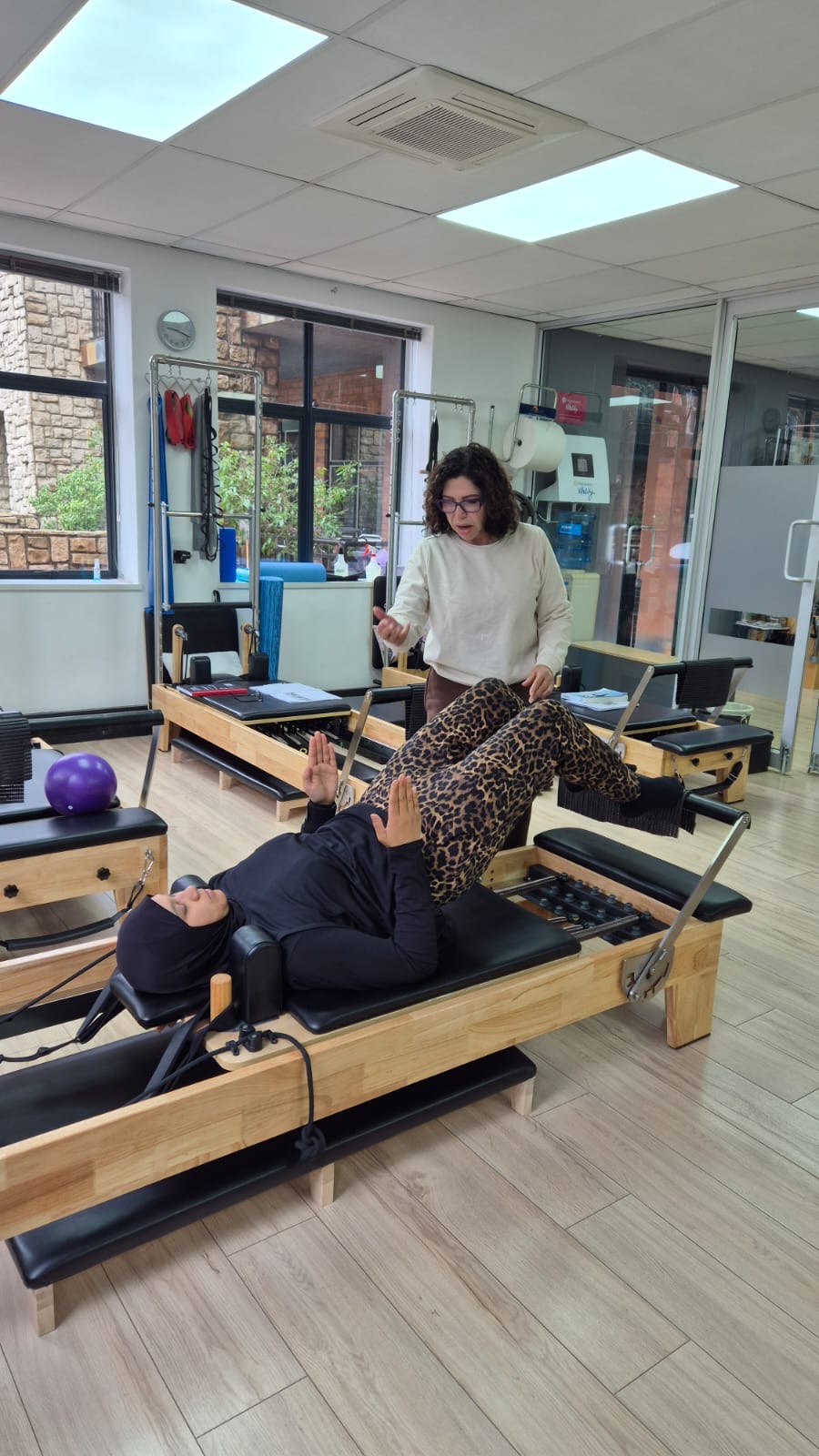
    When performing exercises with the legs in a tabletop position, bringing the knees slightly closer towards the chest can help encourage a gentle posterior pelvic tilt, creating a more imprinted position. This often helps clients engage their abdominal muscles more effectively while reducing strain on the lower back.

    Neutral Spine vs Imprinted Spine: Which One Is Correct?

    The answer is simple:

    Both are correct when used appropriately.

    The goal is not to force every client into the same position. Effective Pilates instruction considers:

    • Individual anatomy
    • Posture
    • Mobility restrictions
    • Existing injuries
    • Strength levels
    • Exercise objectives

    A qualified Pilates instructor will determine whether neutral spine or imprinted spine is most suitable for a particular client and exercise.
    How Pilates Dynamics Teaches Spinal Alignment

    Pilates Dynamics is a leading Pilates Teacher Training Centre and Pilates Studio in Randburg, Johannesburg, with more than 19 years of experience in Pilates education and movement training.

    Our Pilates Teacher Training Courses focus on:

    • Functional anatomy
    • Biomechanics
    • Postural assessment
    • Injury management
    • Exercise adaptations
    • Movement screening
    • Spinal alignment principles

    Students learn how to identify postural deviations and apply appropriate modifications for different body types and population groups.

    Rather than teaching a one-size-fits-all approach, Pilates Dynamics equips future instructors with the knowledge to understand how the body moves and how Pilates exercises can be adapted safely and effectively.

    Pilates Teacher Training Courses in Johannesburg

    If you are looking for comprehensive Pilates Teacher Training in Johannesburg, Pilates Dynamics offers in-depth Pilates Mat and Pilates Reformer courses designed to prepare students for the international Pilates industry.

    Our training goes beyond simply teaching Pilates repertoire. We focus on developing a deep understanding of anatomy, movement, posture, and exercise application so that graduates can confidently work with a wide variety of clients.

    Whether you are starting a new career in Pilates or expanding your professional skills, our courses provide practical, hands-on training and mentorship.

    Pilates Classes in Randburg, Johannesburg

    Pilates Dynamics offers:

    • Private Pilates classes
    • Duo Pilates sessions
    • Group Pilates classes
    • Pilates Reformer training
    • Pilates Mat classes

    Our experienced instructors are dedicated to helping clients improve posture, spinal alignment, core strength, flexibility, and overall movement quality.

    Whether you are a beginner or an experienced practitioner, our team can help you achieve your fitness and wellness goals through personalized Pilates instruction.
    Final Thoughts

    Understanding the difference between a neutral spine and an imprinted spine is one of the most important foundations of Pilates practice.

    A neutral spine promotes optimal alignment and functional movement, while an imprinted spine can provide additional support and stability during specific exercises.

    Neither position is universally right or wrong. The key is understanding when each should be used based on the individual, the exercise, and the desired outcome.

    At Pilates Dynamics, we teach clients and future instructors how to assess movement, understand posture, and apply Pilates principles safely and effectively for every body.

    Pilates Classes in Randburg

    We would love to train with you and would love for you to sign up for classes using this link:

    Pilates Classes at Pilates Dynamics Studio

    Pilates Courses in Johannesburg

    Our Pilates Teacher Training Academy is situated in Randburg. We would love for you to
    sign up for courses using this link:
    Pilates Teacher Training Courses

  • Why Pilates Reformer Classes Are the Best Low-Impact Workout for Winter

    Why Pilates Reformer Classes Are the Best Low-Impact Workout for Winter

    Embrace Winter with Pilates Reformer classes:

    As the days become colder, the tendency is to hibernate and skip your exercise regime for a
    comfortable and snug evening at home with comfort food. But this is the worse thing you
    can do! Come Spring, you may end up being a few kilos heavier than before and some
    parts of your body suddenly seem flabbier than before. Not to mention mental well-being
    that will be affected by your physical appearance and health.

    This is where Reformer Pilates comes in. Pilates Dynamics is a highly rated Pilates studio
    in Johannesburg that offers both Beginner Pilates classes as well as Intermediate
    Pilates classes and Advanced Pilates classes.

    What is Reformer Pilates Classes:
    Reformer Pilates classes is a low-impact highly effective workout that is perfectly suited
    for winter wellness. Let us look at the benefits of Reformer Pilates at Pilates Dynamics
    Studio in Johannesburg.

    Benefits of Reformer Pilates Classes:
    1. Pilates is great for flexibility
    Pilates improve functional flexibility by lengthening and strengthening muscles
    simultaneously. Instead of passive, static stretching, it relies on controlled, active
    movements that improve joint mobility and muscular elasticity without
    compromising alignment.
    How does Pilates create flexibility?
    a. The really great thing about Reformer Pilates is that Pilates principles create
    flexibility avoid overstretching by ensuring that your muscles are
    continuously engaged, and stable throughout the movement.
    b. During Reformer Pilates the focus is also on Spinal Articulation to stretch
    and loosen up your back to improve overall posture.
    c. Hip mobility is absolutely important and Pilates Reformer classes will target
    those tight hip flexors and quads to increase your range of movement.

    2. Pilates is great for posture
    Pilates correct poor posture by strengthening your deep core stabilizers,
    targeting your posterior chain, and improving spinal mobility. It rebalances muscle
    tension to alleviate rounded shoulders, forward head, and lower back strain caused
    by daily habits like sitting at a desk and working on your laptop and cell phone.

    What are the key focus areas of Pilates for improved posture?
    a. Deep Core Engagement strengthens your “powerhouse” which are your
    abdominals, back, and pelvic floor to support your spine.
    b. Spinal Articulation promotes flexibility and restores movement to stiff
    vertebrae which reverses hunched rounded upper back postures.
    c. Mind-Body Awareness enhances proprioception, teaching you how to
    subconsciously hold your head, shoulders and hips in proper alignment during
    the day life and in sports.

    3. Pilates is a low-impact body exercise:
    Pilates Mat and Pilates Reformer classes are a highly effective, low-impact
    workout. It focuses on controlled, fluid movements that build strength, flexibility, and
    core stability without the explosive, high-impact stress on the body like running or
    jumping.

    Why is a low-impact body exercise regime important?
    a. It is Joint-friendly as it avoids harsh impacts, protecting your knees, ankles,
    and hips from overuse injuries.
    b. It is Core-centric since movements originate from the “powerhouse”
    (abdominals, lower back, hips and buttocks) for total body alignment.
    c. It is highly customizable, in other words exercises can easily be modified
    and changed to fit any fitness level or rehabilitation need or modified to
    make Pilates exercises more complex and difficult for athletes.

    Reformer pilates courses

    4. Pilates is great for stress relief:
    Pilates is a powerful tool for managing stress, offering physical and mental benefits.
    By promoting mindfulness, enhancing body awareness, and encouraging relaxation
    through controlled breathing and focus, Pilates assists with combatting the physical
    and emotional toll of stress.
    Pilates can be a valuable part of a stress management routine, whether you are
    looking to relieve muscle tension, calm your mind, or simply take some time out for
    yourself.

    5. Pilates for toning:
    Pilates is excellent for toning because it builds lean, elongated muscles and
    enhances core strength without adding bulk. It focuses on controlled movements
    and eccentric muscle contractions (lengthening under tension) to sculpt a defined,
    firm physique while improving overall posture and joint stability. And Pilates
    strength is built from the inside out. Suddenly you find yourself stronger than
    people much younger than yourself!!

    6. Why are the benefits of doing Pilates Mat classes and Pilates Reformer classes
    in winter?
    Summer bodies are made in winter. It keeps us moving and warm and of course
    fit. By the time we get to summer which is just 3 months away, we are sculpted, fit
    and lean.

    How do I get started with Reformer classes this winter? Engage with experienced instructors who will guide you through tailored workouts designed to enhance your strength, flexibility, and overall well-being. This winter, prioritize your fitness journey by joining our community of like-minded individuals committed to personal growth. Invest in your health by enrolling in our Reformer classes, and witness the profound benefits of Pilates firsthand. Take the first step towards a revitalized lifestyle today.

    Contact the best Pilates studio in Johannesburg or Pilates classes in Johannesburg,
    then contact Pilates Dynamics Studio this winter for your Reformer Pilates classes.
    See and experience how Pilates Mat classes and Pilates Reformer classes transform
    your body and your mind.

    Contact Details

    Website

    Pilates Dynamics Website

    Contact Form

    Pilates Dynamics Contact Page

  • Proper Form and Posture in Exercise: Pilates Classes That Build Strength

    Proper Form and Posture in Exercise: Pilates Classes That Build Strength

    We often get asked the question why form and posture is important in movement?

    And here are the reasons why form, alignment and proper technique are so important in exercise and movement.

    I often cringe when I see people doing squats or a plank exercise at the gym or at CrossFit during weight training and fitness training. Many people do not realize the damage they do to their joints and how misalignment can affect their joints.  After all, longevity is all important if we want to have a pain free existence and avoid injury, discomfort, or possible medical procedure/s.

    The benefits of proper form and alignment during movement and exercise:

    1. It creates a safe workout.

    Whether you are doing a deadlift, or lifting a heavy object, especially above shoulder height, or doing a squat without proper form and technique, it can create a whole series of events leading to injury in the body, and compensation of the wrong muscle group/s.

    This is why we insist on your first Pilates session being a private one-on-one training session to teach you the fundamentals of proper technique and correct muscle engagement.

    1. Proper form, technique and posture will make your workout easier.

    Instead of compensating with the wrong muscles or being in the wrong position, why would you not engage the correct muscles from the start?  Or why would you not hold a body part in the correct position? Your workout will be so much more effective and focused and of course easier and pain free.  And you will make better progress.

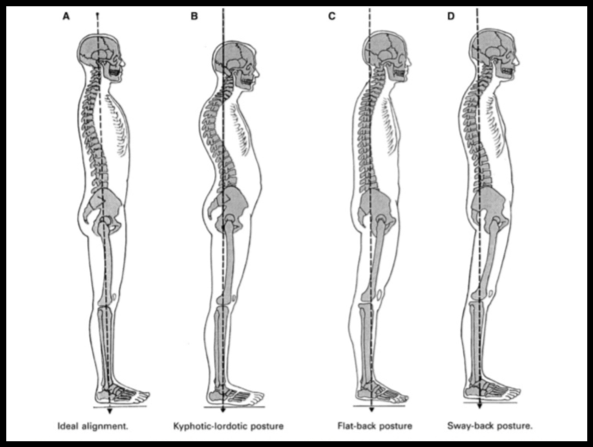
    Anatomically our joints are designed to be positioned in relation to each other in a precise way, whether we are moving or not, which will enable the muscles to work efficiently in a sequence and in the way that they are meant to.   For example, we will teach you how to work in a neutral pelvis, versus a posterior (flat back) or anterior (arching) hip and lower back positions.  Why neutral spine and pelvis? Why a level pelvis? Because that way there are no shearing forces, and you are working in a safe position.

    1. The correct muscles will be targeted with proper form and posture.

    You want to be able to feel muscle fatigue of the targeted muscles, instead of feeling fatigue and pain elsewhere in the body or in the joints.  In addition, you will be able to perform your own workouts safely rather than continue with private training sessions, saving you time and money.  Now that sounds like an awesome deal!  Certain very important abdominal muscles need to be engaged when lifting the legs off the floor, so that your back is protected.  Also give your ribcage placement some thought.  Elevating or popping the ribs for instance during an abdominal workout will have the effect of pulling your back off the floor and losing abdominal control and engagement, thus creating the risk of injury.

    1. In Pilates we pair muscle function with breathing.

    We will teach you when to exhale and when to inhale, based on muscles that are responsible for inhalation and exhalation.  To give an example, we exhale during abdominal work as it maximizes abdominal recruitment.  Trunk extensors assist in inhalation, therefore inhaling during trunk extension maximizes their recruitment.  Of course, other muscles also contract during inhalation and exhalation, BUT muscle contraction is more profound when it corresponds with breathing.

    Breath control is important and is very powerful when it comes to exercise.  It cleanses the body and guides the mind by promoting strength, stamina, and endurance. In addition, it will improve oxygen flow and post workout recovery.

    1. What is good form?

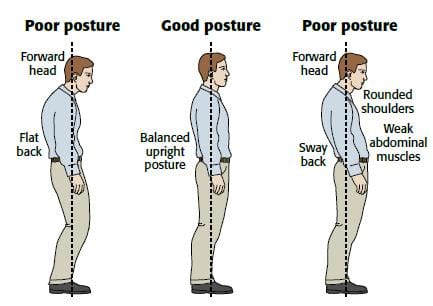
    Let us take a standing position and view the body from the side.  There are 4 important masses of weight in the body.  These are the head, ribcage, pelvis and feet.  The feet are the foundation and depending on the position of the feet, it will impact the rest of the body.  There is a plumb (ideal) line that goes all the way from the feet to the head.  This line should pass through the following point so that the force of gravity is evenly distributed through the body to prevent stress: –

    • lobe of the ear;
    • through the bodies of the neck vertebra;
    • through the shoulder joint (middle of tip of shoulder);
    • midway through the trunk (middle of ribcage);
    • through the hip joint;
    • slightly in front of the midline of the knee; and
    • slightly in front of the ankle

    There is also a back to front component, which will affect the placement of the shoulder blades, which are crucial to prevent shoulder injury.  As we know, the shoulder is a very mobile joint, and as such has less stability.  This is one of the areas that is a big focus in pilates.  Of course, there are many other joints like the knees, which we will focus on as well.

    1. Can a Pilates instructor help me to learn proper form and exercise technique?

    Most definitely, we will book a private lesson for you and take you through the process of proper form, alignment and correct muscles recruitment and breath patterns.  If you still don’t get it during the first private session, we will book another private session/s for you until you and the Pilates instructor is happy that you understand what to do and what not to do during your exercise class.  This is extremely important so that you do not end up hurting yourself during a group class or in the gym during weight training or in Cross Fit training.  Strength training is as important as stretching and you will learn various stretches applicable to your body.  It is important not to skip stretching, as a lack of mobility and too much strength will affect the symmetry of your body and joints and cause injury.

    Pilates exercise focusses on strengthening the deep stabilizing muscles whilst lengthening other muscles and thereby releasing tension, to create balance in the body and to encourage the quality of movement and alignment of joints to prevent strain and injury.

    1. How can I book my first Pilates Lesson?

    Contact Pilates Dynamics on 011-7925459 or 072 999 2229 or email info@pilatesdynamics.co.za to book your first private class.Book your class during the month of April and you will receive a free Pilates lesson, no obligations!  Better still, if you tag us on Social Media you can get the second class for free – no obligations!!

  • What Are the Signs of a Weak Pelvic Floor? Pelvic Floor Muscles and Pilates

    What Are the Signs of a Weak Pelvic Floor? Pelvic Floor Muscles and Pilates

    What are pelvic floor muscles?

    The pelvic floor muscles give us the ability to control the release of urine, faeces, and the passing of wind – and to delay the process until it is convenient for us.
    Why are the Pelvic floor muscles so important?
    Apart from the above important functions like urinating, defecating and the passing of wind, the pelvic floor muscles support the bladder, uterus, and bowel. Pelvic floor muscles support incontinence of bladder and bowel prolapse and are also important for sexual function in males and females.
    In males the Pelvic muscles are important for erectile function and ejaculation. In women, voluntary contractions (squeezing) of the pelvic floor contribute to sexual sensation and arousal. The pelvic floor muscles in women provides support for the baby during pregnancy.
    The Pelvic floor muscles stabilizes the joints of the pelvis including the sacroiliac joint and provides support for the rectum, the prostate and urethra in males and the rectum, vagina, and urethra in females. Simultaneous contraction of the pelvic floor and the diaphragm also serves to maintain the abdominal contents in the abdominal-pelvic cavity.

    What is the Anatomy of the pelvis?

    The pelvic floor forms the base of the group of muscles commonly referred to as the “core”. These muscles stretch between the coccyx and front of the pelvis and between the lateral walls of the pelvis. These layers form a hammock from the pubic bone at the front to the tailbone at the back and spans and from one sitting bone to the other side, in other words “side-to-side”, hence the reference of a “hammock”.
    The pelvic floor muscles are made up of slow (endurance) and fast twitch (power) fibres. It requires the combination of both slow and fast twitch fibres for the pelvic floor to work. It is also important to also understand the interrelationship between pelvic floor and abdominal muscles.
    What is the relationship between pelvic floor and abdominal muscles?
    Co-contraction of the abdominal muscles and the pelvic floor muscles are important when teaching pelvic floor exercises as abdominal muscle activity can assist pelvic floor activity.

    The Pelvic floor muscles are made up of:

    The Puborectalis, pubococcygeus, iliococcygeus and ischiococcygeus.
    When abdominal muscles contract, the pelvic floor muscles responds in the following way;-
    •The Pubococcygeus contracts with the transversus abs.
    •The Iliococcygeus contracts with the obliques
    •The Puborectalis contracts with the rectus abdominis.

    What are Pelvic Floor Muscle Exercises?

    The pelvic floor muscles can be trained with regular and specific exercises. Firstly, we need to understand how to correctly identify our pelvic floor muscles and to actively recruit these muscles prior to movement and exercise.
    This is where Pilates come into the picture. Pilates is great for your pelvic floor, as it teaches you how to engage and strengthen it during every minute of your class. Pilates teaches you to activate your pelvic floor muscles prior to – and during exercise.

    Do I need any previous Pilates experience to join a class?

    Not at all! If you are a beginner, you can join Pilates classes. Prior to joining the Pilates group classes, we will set up a private Pilates class for you during which we will teach you the basics of Pilates, muscle recruitment and correct body alignment to prepare you for the Pilates group classes. Pilates group classes are small. We take a maximum of 8 people per class, to ensure quality training.
    Should you need to do a few private classes prior to joining a group class, that can also be arranged.

    How do I book Pilates classes at Pilates Dynamics?

    Contact us on: info@pilatesdynamics.co.za
    Phone us on: 072 999 2229 or 011-792 5459
    WhatsApp us on: 072 999 2229