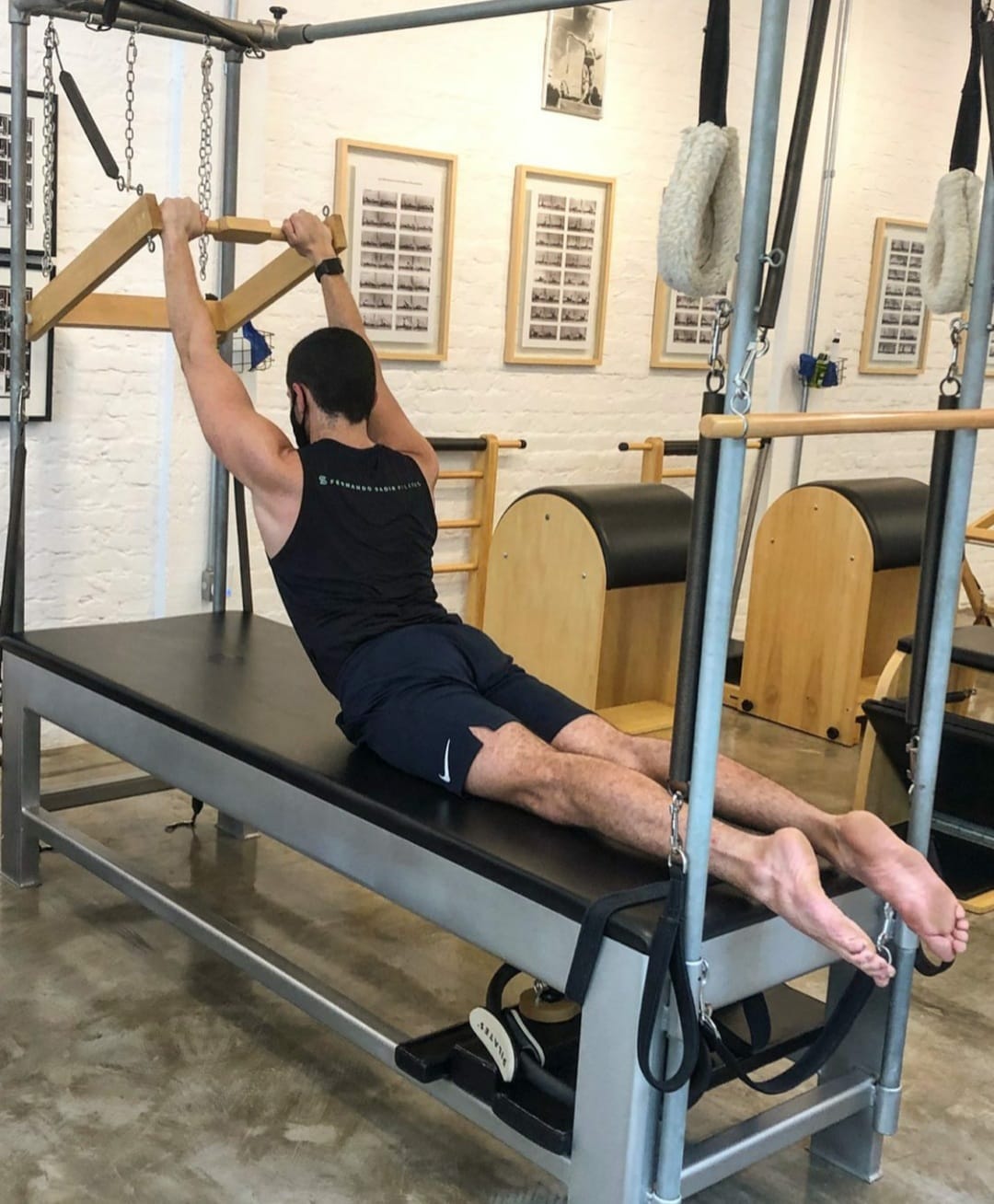
Neutral Spine vs Imprinted Spine in Pilates is a question any new clients who attend their first Pilates Orientation and Assessment at Pilates Dynamics asks.
Should I keep my spine neutral, or should I imprint my lower back into the mat?
The confusion is understandable because many people naturally move into an imprinted spine position during Pilates exercises, regardless of whether it is appropriate for the movement being performed.
Understanding the difference between a neutral spine and an imprinted spine is essential for improving core strength, protecting the lower back, and performing Pilates exercises correctly.
In this article, we explain the difference between neutral spine and imprinted spine in Pilates, when each position should be used, and how Pilates instructors teach proper spinal alignment.
What Is a Neutral Spine in Pilates?
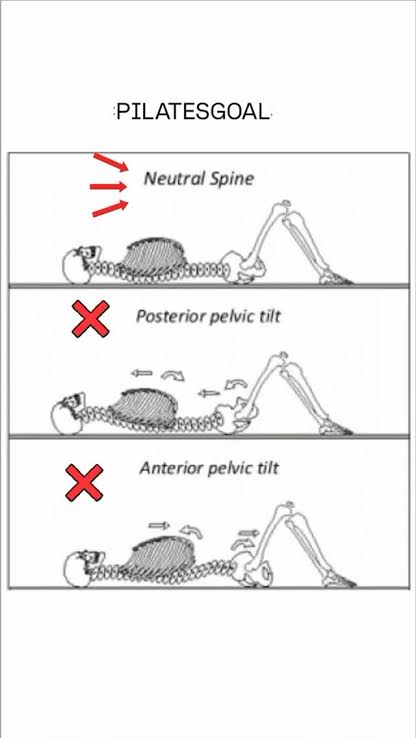
A neutral spine is the natural alignment of the spine where the pelvis, ribcage, and spine are positioned optimally for stability and movement.
To find a neutral spine while lying on your back:
- Place the heels of your hands on the front hip bones (ASIS).
- Position your middle fingers on the pubic bone.
- Create a triangle with your hands.
- Ensure that the front hip bones and pubic bone are level and aligned horizontally.
- Keep the ribcage relaxed so the lower ribs do not lift towards the ceiling.
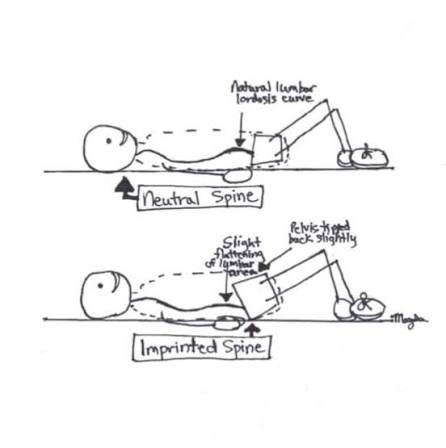
In a neutral spine position, there may be a small natural space between the lower back and the mat. The size of this gap varies from person to person depending on their spinal curvature, anatomy, and soft tissue distribution.
A neutral spine does not mean forcing the lower back flat into the mat. Instead, it means maintaining the spine’s natural curves while keeping the pelvis and ribcage aligned.
Why Is Neutral Spine Important in Pilates?
Maintaining a neutral spine during Pilates exercises helps create optimal spinal and pelvic stability.
When the body is properly aligned:
- The deep core muscles function more effectively.
- The muscles surrounding the hips and spine work efficiently.
- Unnecessary shearing or pulling forces on the joints are reduced.
- Postural muscles can support movement correctly.
- The risk of discomfort and lower back pain may be minimized.
Neutral spine is often the preferred position during many Pilates exercises because it encourages healthy movement patterns that can transfer into everyday activities such as walking, lifting, sitting, and standing.
What Is an Imprinted Spine in Pilates?
An imprinted spine occurs when the pelvis gently tilts backward, flattening the natural curve of the lower back into the mat.
This position is often achieved by engaging the abdominal muscles and slightly tucking the pelvis.
An imprinted spine can provide additional support during certain abdominal exercises, especially for individuals who struggle to maintain spinal stability when their legs are lifted away from the floor.
When Should You Use an Imprinted Spine?
Not everyone can comfortably maintain a neutral spine during every Pilates exercise.
For example, during abdominal exercises where both legs are lifted into the air, some clients experience:
- Excessive arching of the lower back
- Reduced abdominal engagement
- Lower back discomfort or pain
- Difficulty controlling pelvic alignment
In these situations, an imprinted spine may be a safer and more effective option.
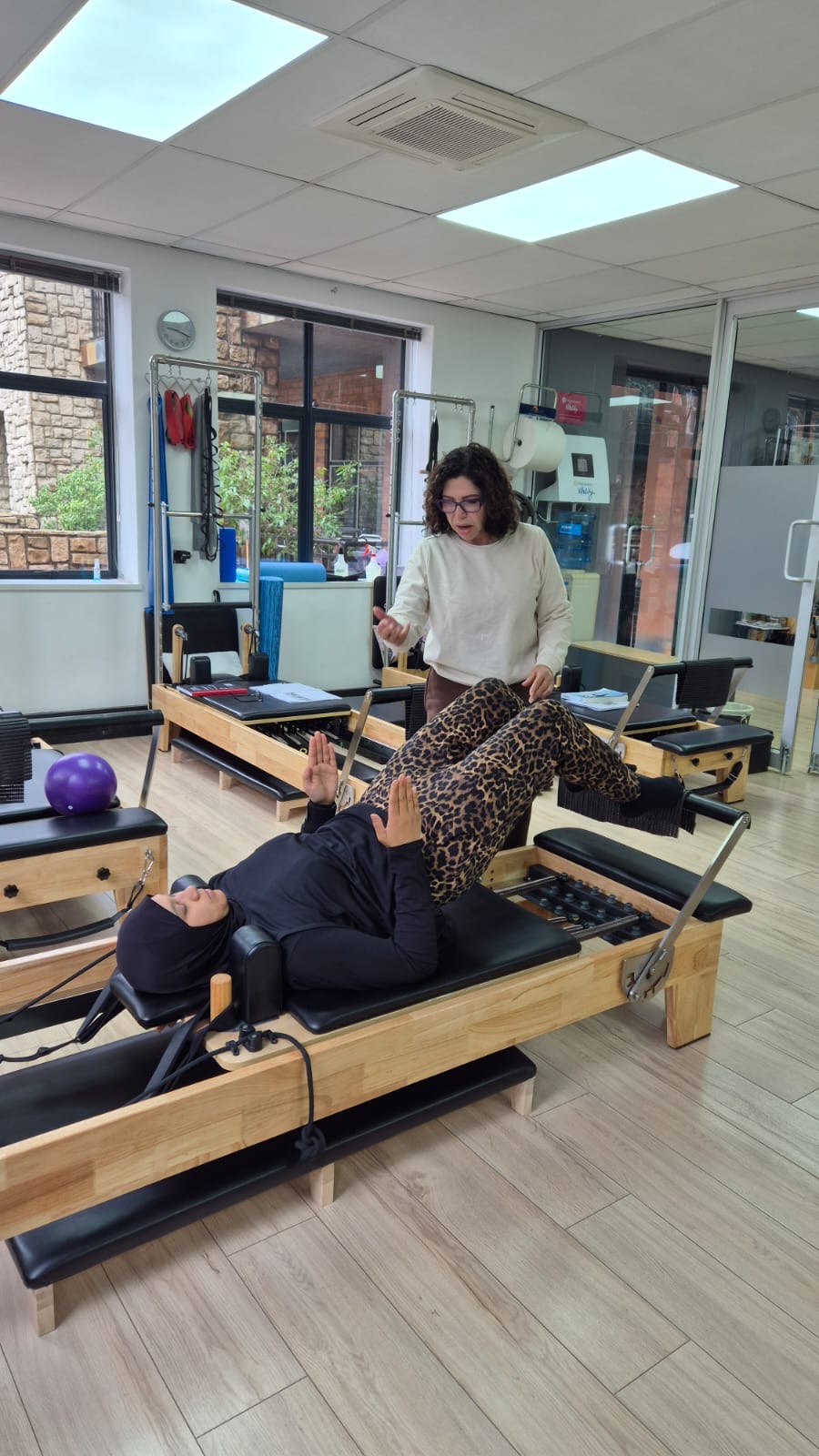
When performing exercises with the legs in a tabletop position, bringing the knees slightly closer towards the chest can help encourage a gentle posterior pelvic tilt, creating a more imprinted position. This often helps clients engage their abdominal muscles more effectively while reducing strain on the lower back.
Neutral Spine vs Imprinted Spine: Which One Is Correct?
The answer is simple:
Both are correct when used appropriately.
The goal is not to force every client into the same position. Effective Pilates instruction considers:
- Individual anatomy
- Posture
- Mobility restrictions
- Existing injuries
- Strength levels
- Exercise objectives
A qualified Pilates instructor will determine whether neutral spine or imprinted spine is most suitable for a particular client and exercise.
How Pilates Dynamics Teaches Spinal Alignment
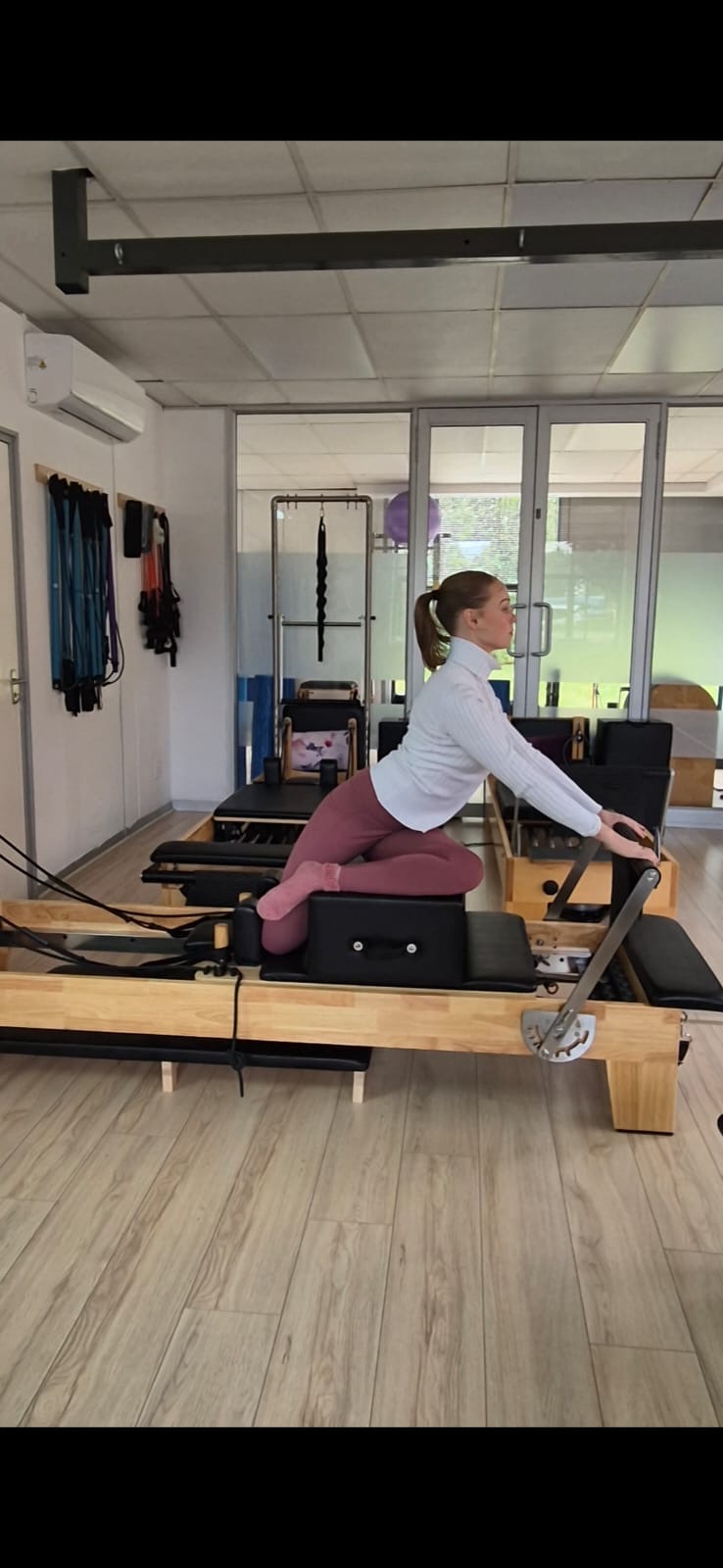
Pilates Dynamics is a leading Pilates Teacher Training Centre and Pilates Studio in Randburg, Johannesburg, with more than 19 years of experience in Pilates education and movement training.
Our Pilates Teacher Training Courses focus on:
- Functional anatomy
- Biomechanics
- Postural assessment
- Injury management
- Exercise adaptations
- Movement screening
- Spinal alignment principles
Students learn how to identify postural deviations and apply appropriate modifications for different body types and population groups.
Rather than teaching a one-size-fits-all approach, Pilates Dynamics equips future instructors with the knowledge to understand how the body moves and how Pilates exercises can be adapted safely and effectively.
Pilates Teacher Training Courses in Johannesburg
If you are looking for comprehensive Pilates Teacher Training in Johannesburg, Pilates Dynamics offers in-depth Pilates Mat and Pilates Reformer courses designed to prepare students for the international Pilates industry.
Our training goes beyond simply teaching Pilates repertoire. We focus on developing a deep understanding of anatomy, movement, posture, and exercise application so that graduates can confidently work with a wide variety of clients.
Whether you are starting a new career in Pilates or expanding your professional skills, our courses provide practical, hands-on training and mentorship.
Pilates Classes in Randburg, Johannesburg
Pilates Dynamics offers:
- Private Pilates classes
- Duo Pilates sessions
- Group Pilates classes
- Pilates Reformer training
- Pilates Mat classes
Our experienced instructors are dedicated to helping clients improve posture, spinal alignment, core strength, flexibility, and overall movement quality.
Whether you are a beginner or an experienced practitioner, our team can help you achieve your fitness and wellness goals through personalized Pilates instruction.
Final Thoughts
Understanding the difference between a neutral spine and an imprinted spine is one of the most important foundations of Pilates practice.
A neutral spine promotes optimal alignment and functional movement, while an imprinted spine can provide additional support and stability during specific exercises.
Neither position is universally right or wrong. The key is understanding when each should be used based on the individual, the exercise, and the desired outcome.
At Pilates Dynamics, we teach clients and future instructors how to assess movement, understand posture, and apply Pilates principles safely and effectively for every body.
Pilates Classes in Randburg
We would love to train with you and would love for you to sign up for classes using this link:
Pilates Courses in Johannesburg
Our Pilates Teacher Training Academy is situated in Randburg. We would love for you to
sign up for courses using this link: